

Can a quartz beaker be used for optical experiments?
Leave a message

Can a quartz beaker be used for optical experiments? That's a question I've been asked a bunch of times as a supplier of quartz beakers. So, I thought I'd sit down and write this blog to spill the beans on whether these nifty little lab tools are a good fit for optical experiments.
First off, let's talk about what makes quartz so special. Quartz is a type of glass that's made up mostly of silicon dioxide. It's got some pretty amazing properties that make it stand out from other types of glass. For starters, it's super transparent. I mean, way more transparent than regular glass. This is because quartz has a very low level of impurities, which allows light to pass through it with very little absorption or scattering.
In optical experiments, transparency is like the name of the game. You want your materials to let light through as clearly as possible so you can accurately observe and measure the effects of light. Whether you're studying refraction, reflection, or absorption, having a clear medium is crucial. And that's where quartz beakers come in. Their high transparency makes them ideal for a wide range of optical experiments.
Another great thing about quartz is its high resistance to heat. Unlike regular glass, which can crack or shatter when exposed to high temperatures, quartz can handle a lot of heat without breaking a sweat. This is important in optical experiments where you might need to heat up your samples or use high - intensity light sources that generate a lot of heat. With a quartz beaker, you don't have to worry about it melting or getting damaged by the heat.
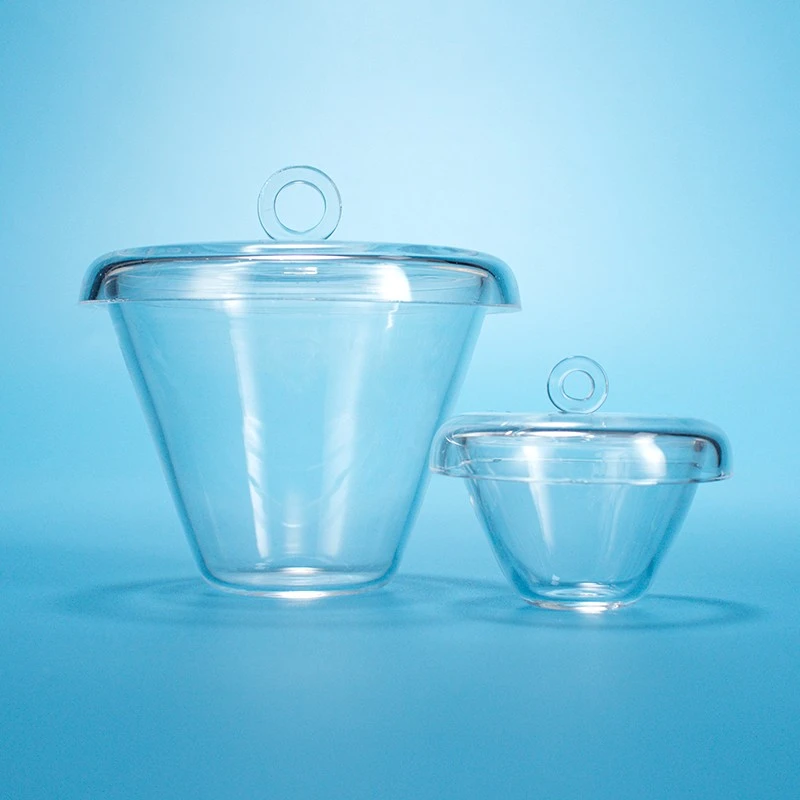

Quartz also has excellent chemical resistance. It's not easily corroded by most chemicals, which means you can use it to hold all sorts of substances in your optical experiments. Whether you're working with acids, bases, or organic solvents, a quartz beaker will keep your samples safe and sound.
Now, let's get into some specific optical experiments where a quartz beaker can come in handy. One common experiment is the study of light refraction. You can fill a quartz beaker with a liquid, like water or oil, and shine a light through it. The change in the direction of the light as it passes from the air into the liquid and then through the quartz can be easily observed and measured. The high transparency of the quartz beaker allows you to see these refraction effects clearly, making it easier to analyze the data.
Another experiment is the measurement of light absorption. You can place a sample solution in a quartz beaker and shine a specific wavelength of light through it. The amount of light absorbed by the sample can be measured using a spectrophotometer. Since quartz doesn't absorb much light itself, it won't interfere with the absorption measurements of your sample, giving you more accurate results.
But it's not all sunshine and rainbows. There are a few things to keep in mind when using a quartz beaker for optical experiments. First of all, quartz beakers are more expensive than regular glass beakers. This is because the manufacturing process of quartz is more complex and requires higher - quality raw materials. So, if you're on a tight budget, you might need to think twice before investing in a quartz beaker.
Secondly, quartz beakers are more fragile than they look. Even though they can handle high temperatures and chemicals, they can still chip or crack if they're not handled carefully. So, you need to be extra gentle when using and cleaning them.
Now, if you're in the market for a quartz beaker for your optical experiments, you might also be interested in other types of laboratory glassware we offer. For example, we have Flask with Three Necks, which are great for chemical reactions that require multiple inlets and outlets. We also have Quartz Distilling Flask for distillation processes, and Quartz Crucible for high - temperature applications.
In conclusion, a quartz beaker can definitely be used for optical experiments. Its high transparency, heat resistance, and chemical resistance make it a great choice for a variety of optical applications. However, you need to consider the cost and the fragility of the beaker before making a purchase.
If you're interested in learning more about our quartz beakers or other laboratory glassware, or if you want to start a procurement negotiation, don't hesitate to reach out. We're always happy to help you find the right products for your needs.
References
- "Handbook of Laboratory Glassware"
- "Optical Properties of Quartz and Its Applications in Science"


