

Can a quartz test tube be used in a vacuum environment?
Leave a message

As a supplier of quartz test tubes, I often encounter various inquiries from customers regarding the suitability of our products for different environments. One question that frequently arises is whether a quartz test tube can be used in a vacuum environment. In this blog post, I will delve into this topic, exploring the properties of quartz, the challenges of vacuum environments, and the practical considerations for using quartz test tubes in such conditions.
Properties of Quartz
Quartz is a crystalline form of silicon dioxide (SiO₂) known for its exceptional physical and chemical properties. These properties make it an ideal material for a wide range of laboratory applications, including test tubes. Here are some key characteristics of quartz:
- High Thermal Resistance: Quartz can withstand high temperatures without significant expansion or contraction. It has a low coefficient of thermal expansion, which means it can maintain its shape and integrity even when exposed to rapid temperature changes. This property is crucial in applications where heating or cooling is involved.
- Chemical Inertness: Quartz is highly resistant to chemical corrosion. It does not react with most acids, bases, or organic solvents, making it suitable for use with a variety of chemicals. This chemical stability ensures that the test tube does not contaminate the samples being analyzed.
- Optical Transparency: Quartz has excellent optical transparency, particularly in the ultraviolet (UV) and infrared (IR) regions. This property allows for easy observation of reactions and measurements using optical techniques, such as spectroscopy.
- Mechanical Strength: Despite its relatively brittle nature, quartz has good mechanical strength. It can withstand moderate pressure and stress, making it suitable for use in various laboratory setups.
Challenges of Vacuum Environments
A vacuum environment is characterized by a low pressure, typically below atmospheric pressure. In a vacuum, the absence of air molecules can have several effects on materials and equipment. Here are some of the challenges associated with using materials in a vacuum environment:
- Outgassing: When a material is placed in a vacuum, the gases and vapors adsorbed on its surface or trapped within its structure can be released. This process, known as outgassing, can contaminate the vacuum system and affect the performance of the equipment. Outgassing can also cause the formation of deposits on the inner surface of the test tube, which can interfere with optical measurements.
- Thermal Conductivity: In a vacuum, heat transfer occurs primarily through radiation, as there are no air molecules to conduct heat. This can lead to uneven heating or cooling of the test tube, which can affect the results of experiments. Additionally, the low thermal conductivity of a vacuum can make it difficult to remove heat from the test tube, potentially leading to overheating.
- Mechanical Stress: The pressure difference between the inside and outside of the test tube can create mechanical stress on the walls of the tube. If the stress exceeds the mechanical strength of the quartz, the test tube may crack or break. This is particularly important in high-vacuum applications, where the pressure difference can be significant.
Using Quartz Test Tubes in a Vacuum Environment
Despite the challenges posed by vacuum environments, quartz test tubes can be used effectively in such conditions. Here are some considerations to keep in mind when using quartz test tubes in a vacuum:

- Outgassing Control: To minimize outgassing, it is important to clean the test tube thoroughly before use. This can be done by rinsing the test tube with a suitable solvent, such as acetone or ethanol, and then baking it at a high temperature to remove any remaining contaminants. Additionally, the test tube should be stored in a clean, dry environment to prevent the adsorption of gases and vapors.
- Thermal Management: To ensure uniform heating or cooling of the test tube, it is important to use a suitable heating or cooling device. This can include a heating mantle, a water bath, or a Peltier cooler. Additionally, the test tube should be insulated to reduce heat loss through radiation.
- Mechanical Design: To prevent the test tube from cracking or breaking under mechanical stress, it is important to design the test tube with appropriate wall thickness and geometry. Additionally, the test tube should be supported properly to distribute the stress evenly.
Other Quartz Laboratory Glassware for Vacuum Applications
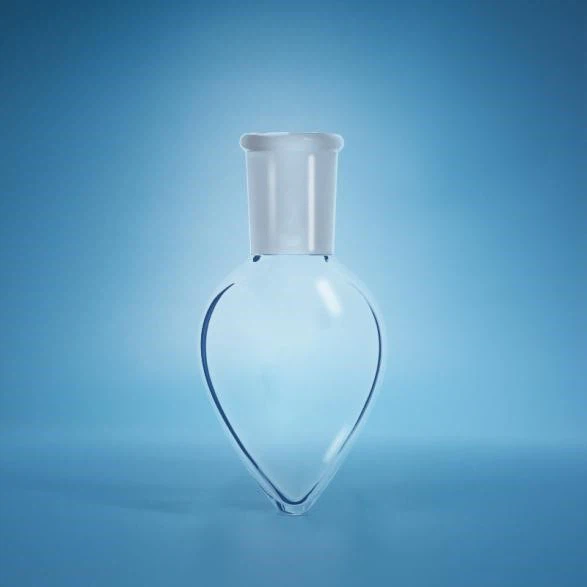
In addition to quartz test tubes, there are other types of quartz laboratory glassware that can be used in vacuum applications. These include Quartz Separating Funnel, Quartz Ground Glass Joint Bottle, and Quartz Pear-Shaped Flask. These glassware items are designed to withstand the challenges of vacuum environments and are suitable for a variety of applications, such as distillation, filtration, and reaction monitoring.
Conclusion
In conclusion, quartz test tubes can be used effectively in a vacuum environment, provided that the appropriate precautions are taken. The high thermal resistance, chemical inertness, optical transparency, and mechanical strength of quartz make it an ideal material for use in vacuum applications. By controlling outgassing, managing thermal transfer, and designing the test tube with appropriate mechanical properties, it is possible to ensure the reliable performance of quartz test tubes in a vacuum environment.
If you are interested in purchasing quartz test tubes or other quartz laboratory glassware for your vacuum applications, please feel free to contact us. We are a leading supplier of high-quality quartz products and can provide you with the technical support and guidance you need to select the right products for your needs.
References
- "Quartz: Properties and Applications." Encyclopedia Britannica.
- "Vacuum Technology: Principles and Applications." John F. O'Hanlon.
- "Laboratory Glassware: Selection and Use." American Chemical Society.


