

How do I measure the size of quartz watch glasses for replacement?
Leave a message

As a supplier of Quartz Watch Glasses, I often receive inquiries from watch repair professionals and enthusiasts alike about how to accurately measure the size of quartz watch glasses for replacement. In this blog post, I'll share the essential steps and tips for taking precise measurements, ensuring you find the perfect replacement glass for any quartz watch.
Why Accurate Measurement is Crucial
Before delving into the measurement process, it's important to understand why getting the size right is so critical. Ill - fitting watch glasses can lead to a host of issues. Not only does it compromise the aesthetics of the watch, but it can also affect the watch's functionality. A glass that is too large may not fit properly into the watch casing, while one that is too small can leave gaps, allowing dust, moisture, and debris to enter the watch, potentially damaging its delicate internal components.
Tools Needed for Measurement
Accurate measurement begins with having the right tools. You'll need a pair of fine - tipped calipers. Digital calipers are preferable as they provide a more precise reading, but traditional Vernier calipers can also do the job. Additionally, a magnifying glass can be extremely helpful, especially when dealing with small or finely detailed areas of the watch.
Measuring the Outer Diameter
The outer diameter is the most common measurement when it comes to quartz watch glasses. To measure this, open the calipers wide enough to place the prongs on either side of the watch glass. Make sure the calipers are perpendicular to the edge of the glass. Gently close the calipers until they make contact with the outer edge of the glass. If you're using digital calipers, the reading will be displayed instantly. For Vernier calipers, carefully read the measurement where the lines on the main scale and the Vernier scale align.

It's advisable to take multiple measurements at different points around the glass. This helps account for any irregularities in the shape of the glass, which can occur due to manufacturing tolerances or wear. Once you have several readings, calculate the average to get a more accurate outer diameter measurement.
Measuring the Inner Diameter (if applicable)
In some cases, especially for watches with a bezel that holds the glass in place, you may also need to measure the inner diameter. This is the diameter of the opening where the glass sits inside the watch. The process is similar to measuring the outer diameter. Use the calipers to measure across the inner opening at various points. Again, take multiple readings and calculate the average to ensure accuracy.
Measuring the Thickness
Thickness is another important parameter. To measure the thickness of the quartz watch glass, place one prong of the calipers on the top surface of the glass and the other on the bottom surface. Make sure the calipers are perpendicular to the glass surface. Take the measurement and record it. Similar to the diameter measurements, it's a good idea to take multiple thickness measurements at different locations on the glass, as the thickness may vary slightly.
Measuring Special - Shaped Glasses
Not all quartz watch glasses are circular. Some watches may have rectangular, oval, or even irregularly - shaped glasses. For non - circular glasses, measuring the dimensions becomes a bit more complex.
For rectangular glasses, measure the length and width using the calipers. Take the measurements from the outer edges of the glass. As with circular glasses, take multiple measurements at different points along the length and width to ensure accuracy.
Oval glasses require measuring the major axis (the longest diameter) and the minor axis (the shortest diameter). Place the calipers across the longest and shortest parts of the oval respectively and record the measurements.
For irregularly - shaped glasses, you may need to use a flexible measuring tape or a template. A flexible measuring tape can be wrapped around the outer edge of the glass to get the circumference. If you have access to a 3D scanner, it can provide highly accurate measurements of complex shapes.
Using the Measurements to Select a Replacement Glass
Once you have all the necessary measurements, you can use them to select the appropriate replacement quartz watch glass from our extensive range. Our products are manufactured to high precision, ensuring a perfect fit for your watch.
Related Laboratory Glassware
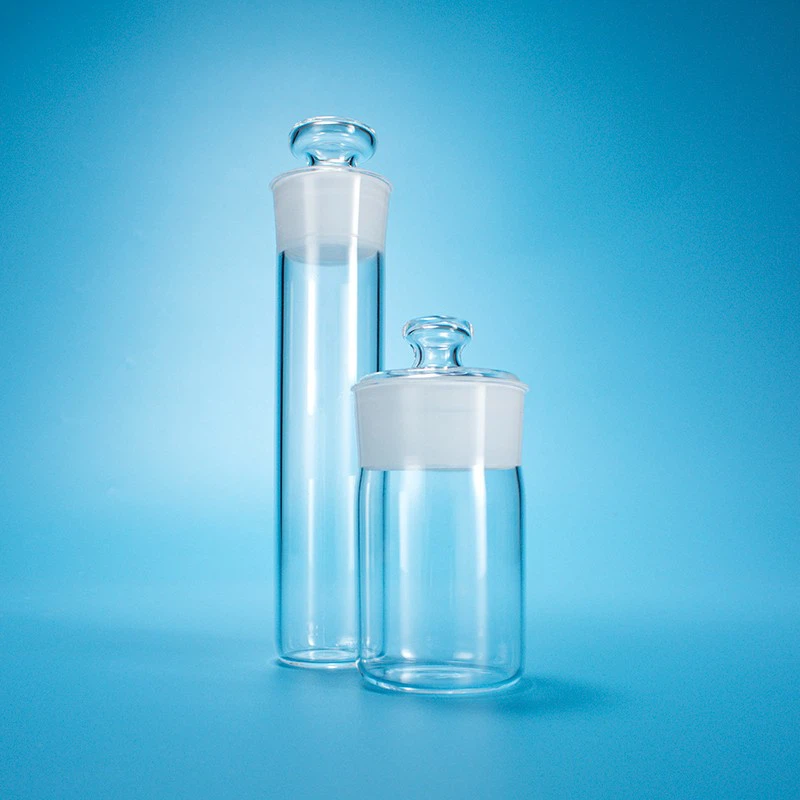
If you're interested in the properties of quartz, you might also be curious about other quartz - based products. For example, Quartz Flask is widely used in laboratories for its excellent chemical resistance and high - temperature stability. Another interesting item is the Conical Flask, which is a staple in many scientific experiments. And if you need a container with a ground - glass joint, the Quartz Ground Glass Joint Bottle is a great option.
Contact Us for Procurement
If you're in the market for high - quality quartz watch glasses, don't hesitate to reach out. We have a team of experts ready to assist you with any questions you may have about our products, sizing, or installation. Whether you're a professional watchmaker or a hobbyist, we can provide you with the right replacement glass for your needs.
References
- "Watch Repair Manual", a comprehensive guide on watch components and repair techniques.
- "Quartz Materials in Precision Instruments", a research paper on the properties and applications of quartz in various instruments.


