

How does Quartz Ingot react to magnets?
Leave a message

Hey there! I'm a supplier of Quartz Ingot, and today I wanna chat about how Quartz Ingot reacts to magnets. It's a topic that might not be on everyone's radar, but it's pretty interesting, especially if you're in industries that use Quartz Ingot.

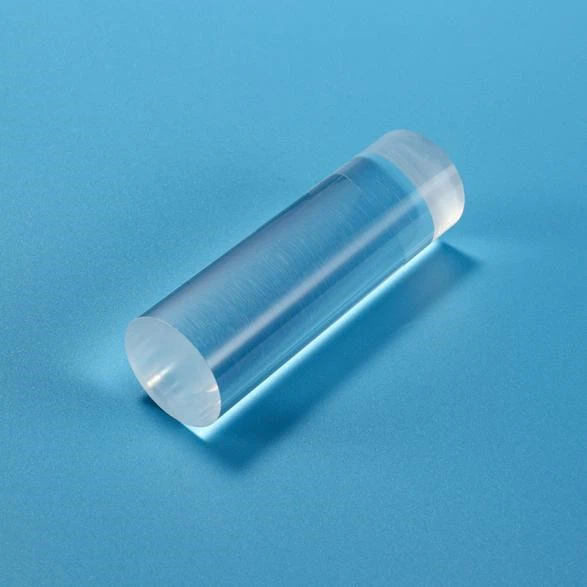
First off, let's understand what Quartz Ingot is. Quartz is a mineral composed of silicon and oxygen atoms, with a chemical formula of SiO₂. It's one of the most abundant minerals on Earth and has a wide range of applications. Quartz Ingot is a processed form of quartz, often used in industries like electronics, optics, and even in some high - tech manufacturing.
Now, onto the main question: how does Quartz Ingot react to magnets? Well, quartz is diamagnetic. What does that mean? Diamagnetic materials are those that create an induced magnetic field in the opposite direction of an applied magnetic field. In simpler terms, when you bring a magnet close to Quartz Ingot, it'll show a very weak repulsion.
This repulsion is extremely weak compared to the attraction you'd see with ferromagnetic materials like iron or nickel. The magnetic susceptibility of quartz is very low, typically in the range of about - 1.2×10⁻⁵ SI units. To put it in perspective, if you try to pick up a piece of Quartz Ingot with a regular bar magnet, you won't notice any significant interaction. You'd need some very sensitive scientific equipment to measure the tiny repulsion force.
The reason behind this diamagnetic behavior lies in the electron configuration of the silicon and oxygen atoms in quartz. When an external magnetic field is applied, the electrons in these atoms start to move in a way that creates a magnetic field opposing the applied field. But since the effect is so small, it doesn't have much practical impact in most everyday situations.
However, in some high - precision scientific experiments or in certain industrial processes, this diamagnetic property can be important. For example, in some ultra - sensitive measurement devices, the diamagnetic nature of quartz can be used to minimize interference from external magnetic fields. Since it repels the magnetic field slightly, it can help in creating a more stable and accurate measurement environment.
In the electronics industry, Quartz Ingot is used to make things like quartz oscillators. These oscillators are crucial for providing accurate timing signals in electronic devices such as computers, smartphones, and GPS systems. The diamagnetic property of quartz doesn't directly affect the oscillator's function, but it does mean that the quartz components aren't easily influenced by magnetic fields that are present in the environment. This helps in maintaining the stability and accuracy of the oscillator.
Now, let's talk about some related products. If you're into the quartz business, you might also be interested in Quartz Sand. Quartz sand is a raw material that can be further processed to make Quartz Ingot. It has a wide range of uses, from glassmaking to water filtration. Another related product is Raw Material Of Quartz Plate. Quartz plates are used in various optical and electronic applications, and the raw material is often sourced from high - quality quartz deposits. And then there's Quartz Rod, which is used in applications like semiconductor manufacturing and fiber optics.
If you're in the market for Quartz Ingot or any of these related products, I'm here to help. Whether you're a small - scale manufacturer or a large - scale industrial company, I can provide you with high - quality quartz products at competitive prices. The diamagnetic property of Quartz Ingot might not be the first thing you think about when you're looking to buy it, but it's just one of the many interesting aspects of this amazing material.
If you have any questions about Quartz Ingot, its reaction to magnets, or any of our other products, feel free to reach out. We can have a chat about your specific needs and see how I can assist you in getting the right quartz products for your business. Whether you're planning a new project or looking to replace your current quartz suppliers, I'm confident that I can offer you a great solution.
So, don't hesitate to contact me if you're interested in purchasing Quartz Ingot or any of the related products I've mentioned. Let's start a conversation and see how we can work together to meet your quartz requirements.
References
- Kittel, C. (1996). Introduction to Solid State Physics. Wiley.
- CRC Handbook of Chemistry and Physics. (2009). CRC Press.


