

How to correct chromatic aberration in optics?
Leave a message

Chromatic aberration is a common optical phenomenon that can significantly affect the quality of optical systems. As an optics supplier, we understand the importance of addressing this issue to provide high - performance optical products. In this blog, we will explore the causes of chromatic aberration and various methods to correct it.
What is Chromatic Aberration?
Chromatic aberration occurs because different wavelengths of light refract at different angles when passing through a lens. This is due to the fact that the refractive index of a material varies with the wavelength of light, a property known as dispersion. As a result, different colors of light focus at different points along the optical axis, leading to blurred images with colored fringes.
There are two main types of chromatic aberration: axial (longitudinal) chromatic aberration and lateral (transverse) chromatic aberration. Axial chromatic aberration causes different colors to focus at different distances from the lens, while lateral chromatic aberration causes different colors to be displaced laterally from each other in the image plane.
Causes of Chromatic Aberration
The root cause of chromatic aberration lies in the dispersion of optical materials. When light enters a lens, the shorter wavelengths (such as blue light) are refracted more than the longer wavelengths (such as red light). This differential refraction leads to the separation of colors and the formation of chromatic aberration.
The amount of chromatic aberration also depends on the shape and design of the lens. Simple single - element lenses, such as plano - convex or double - convex lenses, are particularly prone to chromatic aberration. Additionally, the optical power of the lens and the range of wavelengths of the incident light can influence the severity of the problem.
Methods to Correct Chromatic Aberration
Achromatic Lenses
One of the most common methods to correct chromatic aberration is by using achromatic lenses. An achromatic lens is a combination of two or more lenses made from different types of glass with different dispersion characteristics. Typically, a positive lens made of crown glass and a negative lens made of flint glass are used.
The positive lens has a relatively low dispersion, while the negative lens has a higher dispersion. By carefully selecting the materials and the curvatures of the lenses, the chromatic aberration of one lens can be compensated for by the other. Achromatic lenses can correct axial chromatic aberration for two wavelengths, usually red and blue, and significantly reduce the overall chromatic aberration in the visible spectrum.
For example, in a microscope objective or a camera lens, achromatic lenses are often used to improve the image quality. The combination of different glasses helps to bring two different colors to the same focus point, resulting in a sharper and more color - accurate image.
Apochromatic Lenses
Apochromatic lenses are an advanced form of chromatic - aberration correction. These lenses are designed to correct chromatic aberration for three or more wavelengths, providing even better color correction than achromatic lenses. Apochromatic lenses typically use special types of glass, such as fluorite or low - dispersion glass, in addition to the traditional crown and flint glasses.
The use of these special materials allows for a more precise control of the dispersion and refractive index, enabling the lens to focus multiple colors at the same point. Apochromatic lenses are commonly used in high - end optical systems, such as astronomical telescopes and professional camera lenses, where the highest level of image quality is required.
Diffractive Optical Elements
Diffractive optical elements (DOEs) can also be used to correct chromatic aberration. DOEs work based on the principle of diffraction, which is different from the refraction principle used in traditional lenses. A DOE can be designed to have a dispersion that is opposite to that of a refractive lens.
When combined with a refractive lens, the DOE can compensate for the chromatic aberration of the lens. For example, a diffractive lens can be integrated into a conventional lens system to correct the chromatic aberration over a wide range of wavelengths. DOEs are particularly useful in applications where compactness and lightweight are important, such as in some portable optical devices.
Software Correction
In addition to optical methods, software correction can also be used to reduce the visible effects of chromatic aberration. Modern digital cameras and imaging systems often include software algorithms that can analyze the image and correct the color fringing caused by chromatic aberration.
These algorithms work by detecting the color differences in the image and applying appropriate adjustments to align the colors. Software correction can be a cost - effective way to improve the image quality, especially in consumer - grade optical products. However, it is important to note that software correction can only reduce the visible effects of chromatic aberration and may not be as effective as optical correction methods in some cases.
Our Role as an Optics Supplier
As an optics supplier, we offer a wide range of products and solutions to address chromatic aberration. We provide high - quality achromatic and apochromatic lenses that are carefully designed and manufactured to meet the specific requirements of our customers. Our lenses are made from the finest optical materials, ensuring excellent color correction and image quality.
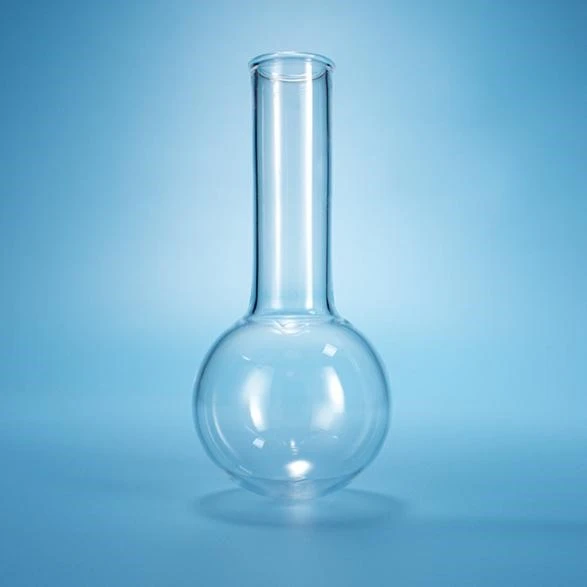
In addition to lenses, we also supply Quartz Diffusion Tube, Quartz Bell Jar, and Kjeldahl Flasks which are used in various optical and laboratory applications. These products are made with high precision and strict quality control to ensure their performance and reliability.
We have a team of experienced optical engineers and technicians who can work closely with our customers to understand their needs and provide customized solutions. Whether you are designing a new optical system or looking to improve the performance of an existing one, we can offer professional advice and support.

Conclusion
Chromatic aberration is a significant issue in optics that can degrade the quality of optical systems. However, with the right methods and products, it can be effectively corrected. As an optics supplier, we are committed to providing our customers with the best solutions to address chromatic aberration.
If you are interested in our products or need further information on chromatic aberration correction, please feel free to contact us for procurement and洽谈. We look forward to working with you to achieve high - performance optical systems.
References
- Hecht, E. (2017). Optics (5th ed.). Pearson.
- Smith, W. J. (2007). Modern Optical Engineering: The Design of Optical Systems (4th ed.). McGraw - Hill.
- Born, M., & Wolf, E. (1999). Principles of Optics: Electromagnetic Theory of Propagation, Interference and Diffraction of Light (7th ed.). Cambridge University Press.


