

How to dissolve substances in a quartz beaker effectively?
Leave a message

Dissolving substances effectively in a quartz beaker is a crucial skill in various scientific and industrial applications. As a trusted supplier of high - quality quartz beakers, I understand the importance of this process and am here to share some valuable insights on how to achieve optimal results.
Understanding the Properties of Quartz Beakers
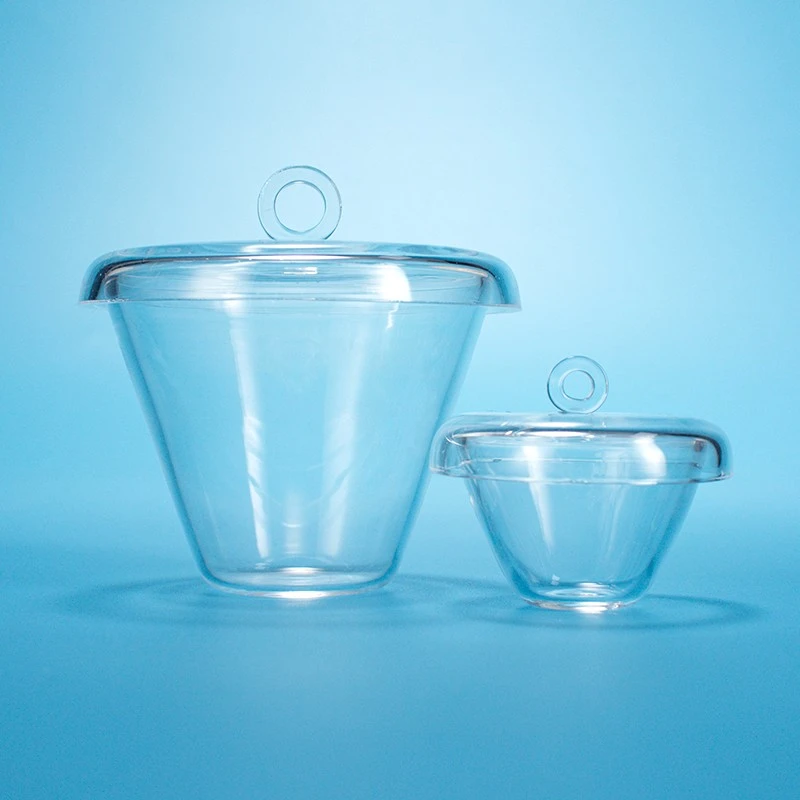
Quartz beakers are made from high - purity quartz glass, which offers several unique properties that make them ideal for dissolving substances. Firstly, quartz has excellent chemical resistance. It can withstand a wide range of chemicals, including strong acids and bases, without being corroded. This means that you can use quartz beakers to dissolve a variety of substances without worrying about the beaker itself reacting with the chemicals.
Secondly, quartz has high thermal stability. It can endure rapid temperature changes and high temperatures without cracking or deforming. This property is particularly useful when you need to heat the solution to facilitate the dissolution process. For example, in some experiments, you may need to heat a solution to its boiling point to dissolve a solid substance completely. A quartz beaker can handle such high - temperature operations safely.
Preparing the Quartz Beaker
Before using a quartz beaker to dissolve substances, it is essential to prepare it properly. First, clean the beaker thoroughly. Use a mild detergent and distilled water to wash the beaker, then rinse it several times to remove any traces of the detergent. After that, dry the beaker completely. You can either let it air - dry or use a clean, lint - free cloth to wipe it dry.
Inspect the beaker for any cracks or defects. Even a small crack can compromise the integrity of the beaker and may cause it to break during use. If you find any damage, do not use the beaker and replace it with a new one.
Selecting the Right Solvent
The choice of solvent is crucial for effective dissolution. Different substances have different solubilities in various solvents. For example, polar substances are usually more soluble in polar solvents like water, while non - polar substances dissolve better in non - polar solvents such as hexane or toluene.
When selecting a solvent, consider the nature of the substance you want to dissolve. If you are unsure, you can refer to solubility tables or conduct some preliminary tests. It is also important to ensure that the solvent is compatible with the quartz beaker. As mentioned earlier, quartz has good chemical resistance, but some highly reactive solvents may still cause problems over time.
Controlling the Temperature
Temperature plays a significant role in the dissolution process. In general, increasing the temperature can increase the solubility of most solid substances. When using a quartz beaker, you can heat the solution to speed up the dissolution. However, it is important to heat the beaker gradually to avoid thermal shock.
You can use a hot plate or a Bunsen burner to heat the quartz beaker. If using a hot plate, set the temperature to a moderate level and gradually increase it as needed. When using a Bunsen burner, use a wire gauze to distribute the heat evenly and prevent direct contact between the flame and the beaker.

Stirring the Solution
Stirring the solution is another effective way to enhance the dissolution process. Stirring helps to increase the contact between the solute and the solvent, which promotes the dissolution of the solute. You can use a glass rod or a magnetic stirrer to stir the solution.
If using a glass rod, gently stir the solution in a circular motion. Be careful not to scratch the inside of the quartz beaker with the glass rod. A magnetic stirrer is a more convenient option. Place a magnetic stir bar in the beaker and place the beaker on a magnetic stirrer plate. Adjust the speed of the stirrer according to the requirements of the experiment.
Using Additional Equipment
In some cases, you may need to use additional equipment to dissolve substances effectively in a quartz beaker. For example, if you are dealing with a very fine powder or a substance that is difficult to dissolve, you can use a sonicator. A sonicator uses ultrasonic waves to create small bubbles in the solution, which can help to break up the particles of the solute and increase the dissolution rate.
Another useful piece of equipment is a reflux condenser. If you need to heat the solution for an extended period to dissolve a substance, a reflux condenser can prevent the solvent from evaporating. You can find high - quality Quartz Condenser Tube on our website, which is suitable for such applications.
Safety Precautions
When dissolving substances in a quartz beaker, safety should always be your top priority. Wear appropriate personal protective equipment, such as safety goggles, gloves, and a lab coat. Some solvents and chemicals can be harmful if they come into contact with your skin or eyes.
Be careful when handling hot beakers. Use heat - resistant gloves or tongs to hold the beaker. Also, make sure to work in a well - ventilated area, especially when using volatile solvents.
Applications and Related Products
Quartz beakers are widely used in various fields, including chemistry, biology, and materials science. In addition to quartz beakers, we also offer other high - quality quartz laboratory glassware. For example, our Quartz Reagent Bottle is ideal for storing reagents, and our Quartz Crucible is suitable for high - temperature applications.
Conclusion
Dissolving substances effectively in a quartz beaker requires a combination of proper preparation, the right choice of solvent, temperature control, and appropriate stirring. By following the tips and techniques outlined in this blog, you can achieve better results in your experiments and industrial processes.
If you are interested in purchasing high - quality quartz beakers or other quartz laboratory glassware, please feel free to contact us for more information and to start a procurement discussion. We are committed to providing you with the best products and services to meet your scientific and industrial needs.
References
- Atkins, P. W., & de Paula, J. (2014). Physical Chemistry. Oxford University Press.
- Skoog, D. A., West, D. M., Holler, F. J., & Crouch, S. R. (2013). Fundamentals of Analytical Chemistry. Brooks/Cole.
- Vogel, A. I. (1978). Vogel's Textbook of Quantitative Chemical Analysis. Longman.


