

How to measure small volumes accurately with laboratory glassware?
Leave a message

Accurately measuring small volumes in a laboratory setting is a critical skill that can significantly impact the outcome of experiments. The choice of laboratory glassware and the proper techniques employed play a pivotal role in achieving precise measurements. As a trusted laboratory glassware supplier, we understand the importance of providing high - quality glassware and sharing knowledge on its correct use. In this blog, we will explore how to measure small volumes accurately using laboratory glassware.
Understanding the Basics of Laboratory Glassware for Small - Volume Measurement
There are several types of laboratory glassware designed for measuring small volumes, each with its own unique features and applications.
Pipettes
Pipettes are one of the most commonly used tools for measuring small volumes. They come in various types, including volumetric pipettes, graduated pipettes, and micropipettes. Volumetric pipettes are designed to deliver a single, fixed volume of liquid with high accuracy. For example, a 1 - mL volumetric pipette is calibrated to deliver exactly 1 mL of liquid at a specified temperature. Graduated pipettes, on the other hand, have markings along their length, allowing for the measurement of different volumes within a certain range. Micropipettes are used for extremely small volume measurements, typically in the microliter range. They are highly precise and can be adjusted to deliver specific volumes.
When using pipettes, it is essential to follow proper technique. First, ensure that the pipette is clean and dry. If it is a volumetric pipette, fill it above the calibration mark using a pipette bulb or a pipette filler. Then, slowly drain the liquid until the bottom of the meniscus is exactly at the calibration mark. When dispensing the liquid, touch the tip of the pipette to the side of the receiving vessel to ensure complete transfer.
Burettes
Burettes are long, graduated tubes with a stopcock at the bottom. They are commonly used in titrations to deliver precise volumes of a solution. Burettes can measure volumes with an accuracy of up to 0.01 mL. To use a burette, first, rinse it with the solution to be used to avoid dilution. Fill the burette above the zero mark and then open the stopcock to allow the solution to flow out until the level is at or slightly below the zero mark. Read the initial volume by observing the bottom of the meniscus. As the solution is dispensed during the titration, record the final volume to determine the volume of solution delivered.
Measuring Cylinders
Measuring cylinders are simple and widely used for measuring small to moderate volumes of liquids. They come in various sizes, from a few milliliters to several liters. While they are not as accurate as pipettes or burettes, they are suitable for less precise measurements. When using a measuring cylinder, place it on a flat surface and read the volume at the bottom of the meniscus. Make sure your eyes are level with the meniscus to avoid parallax errors.

Factors Affecting the Accuracy of Small - Volume Measurement
Several factors can affect the accuracy of small - volume measurement using laboratory glassware.
Temperature
The volume of a liquid changes with temperature. Most laboratory glassware is calibrated at a specific temperature, usually 20°C. If the temperature of the liquid being measured is different from the calibration temperature, the volume reading may be inaccurate. For example, if the liquid is warmer than the calibration temperature, it will expand, and the actual volume will be greater than the volume indicated on the glassware. To minimize temperature - related errors, it is advisable to allow the liquid and the glassware to reach the calibration temperature before measurement.
Meniscus Reading
The meniscus is the curved surface of a liquid in a container. When reading the volume, it is important to read the bottom of the meniscus for aqueous solutions. For some liquids, such as mercury, the top of the meniscus is read. Parallax errors can occur if the observer's eyes are not level with the meniscus. To avoid this, always read the volume at eye level.
Contamination
Contamination of the glassware can also affect the accuracy of measurement. Residues from previous experiments or impurities in the glassware can alter the volume of the liquid being measured. Therefore, it is crucial to clean the glassware thoroughly before each use. Use appropriate cleaning agents and follow the recommended cleaning procedures.
High - Quality Laboratory Glassware for Accurate Small - Volume Measurement
As a laboratory glassware supplier, we offer a wide range of high - quality glassware suitable for small - volume measurement. Our Quartz Threaded Vial is made of high - purity quartz, which is resistant to chemical corrosion and has excellent thermal stability. It is ideal for storing and measuring small volumes of samples, especially in applications where chemical reactivity is a concern.
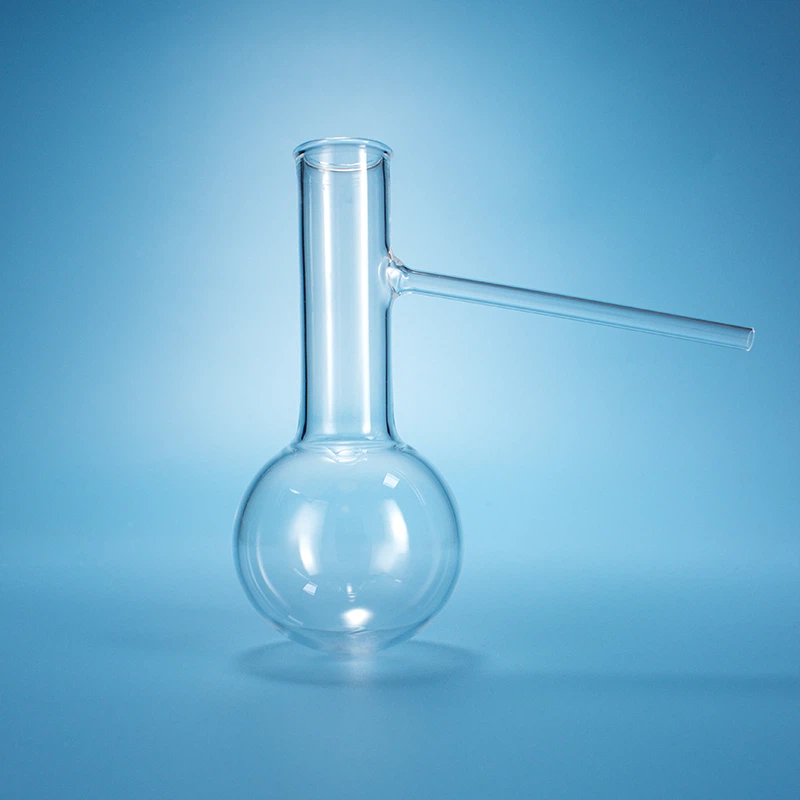
Our Quartz Distilling Flask is another great option for small - volume distillation processes. It is made of quartz, which can withstand high temperatures and is transparent, allowing for easy observation of the distillation process. The flask is designed to ensure efficient heat transfer and accurate volume measurement during distillation.
For microbiological applications, our Quartz Petri Culture Dishes are an excellent choice. They are made of quartz, which provides a clean and inert surface for culturing microorganisms. The dishes are available in different sizes and can be used for accurate volume measurements when adding culture media or samples.
Tips for Improving Measurement Accuracy
- Calibration: Regularly calibrate your glassware to ensure its accuracy. Calibration can be done using standard solutions of known volume. Many laboratory suppliers, including us, offer calibration services or calibration kits.
- Practice Proper Technique: As mentioned earlier, proper technique is crucial for accurate measurement. Practice using pipettes, burettes, and other glassware regularly to improve your skills.
- Use Appropriate Glassware: Select the glassware that is most suitable for the volume and accuracy requirements of your experiment. For example, if you need to measure a very small volume with high precision, use a micropipette instead of a measuring cylinder.
Conclusion
Accurately measuring small volumes with laboratory glassware is a fundamental skill in the laboratory. By understanding the different types of glassware available, following proper technique, and considering the factors that affect accuracy, you can achieve reliable and precise measurements. As a laboratory glassware supplier, we are committed to providing high - quality glassware that meets the needs of researchers and scientists. If you are interested in purchasing our laboratory glassware or have any questions about small - volume measurement, please feel free to contact us for procurement and further discussion.
References
- Harris, D. C. (2010). Quantitative Chemical Analysis. W. H. Freeman and Company.
- Skoog, D. A., West, D. M., Holler, F. J., & Crouch, S. R. (2013). Fundamentals of Analytical Chemistry. Cengage Learning.
- Vogel, A. I. (1978). Vogel's Textbook of Quantitative Chemical Analysis. Longman.


