

What are the applications of Quartz Ingot in electronics?
Leave a message

Quartz ingot, a highly pure and crystalline form of silicon dioxide, has emerged as a crucial material in the electronics industry. As a leading supplier of quartz ingot, I've witnessed firsthand its diverse applications and the pivotal role it plays in modern electronic devices. In this blog post, I'll delve into the various uses of quartz ingot in electronics, highlighting its unique properties and why it's the material of choice for many electronic applications.
1. Semiconductor Manufacturing
One of the most significant applications of quartz ingot is in semiconductor manufacturing. Semiconductors are the building blocks of modern electronics, used in everything from smartphones and computers to cars and industrial equipment. Quartz ingot is used to produce high - purity quartz crucibles, which are essential for the Czochralski process. This process is the primary method for growing single - crystal silicon ingots, the foundation of most semiconductor devices.
The high purity of quartz ingot ensures that the crucibles are free from impurities that could contaminate the silicon melt. Additionally, quartz has excellent thermal stability, which allows it to withstand the high temperatures (up to 1420°C) required for melting silicon. The smooth surface of quartz crucibles also promotes the growth of high - quality single - crystal silicon, which is crucial for the performance of semiconductor devices. For more information about the raw material aspects related to this, you can visit Raw Material Of Quartz Plate.
2. Oscillators and Resonators
Quartz ingot is also widely used in the production of oscillators and resonators. These components are essential for generating and controlling precise frequencies in electronic circuits. When an electric field is applied to a quartz crystal, it vibrates at a specific frequency due to the piezoelectric effect. This property makes quartz an ideal material for creating stable and accurate frequency sources.
Quartz oscillators are used in a variety of applications, including clocks, watches, communication systems, and computer motherboards. They provide the timing signals necessary for the proper operation of these devices. For example, in a smartphone, the quartz oscillator ensures that the device's internal clock runs accurately, which is crucial for functions such as call timing, data transfer, and synchronization with other devices. Resonators, on the other hand, are used to filter out unwanted frequencies and improve the signal quality in electronic circuits.
3. Optical Fibers
Optical fibers are another area where quartz ingot finds extensive use. These thin, flexible fibers are used to transmit data over long distances at high speeds, making them a key component of modern communication networks. Quartz ingot is used as the raw material for manufacturing optical fiber preforms, which are then drawn into thin fibers.

The high purity and low attenuation properties of quartz make it an ideal material for optical fibers. It allows light to travel long distances with minimal loss of signal strength, enabling high - speed data transmission. Additionally, quartz has excellent mechanical properties, which make the optical fibers strong and flexible enough to be installed in various environments, including underground cables and undersea communication lines. If you're interested in the raw materials related to optical fiber production, Quartz Sand is also an important aspect to consider.
4. Insulation and Dielectric Applications
In electronic devices, insulation and dielectric materials are crucial for preventing electrical short - circuits and ensuring the proper functioning of components. Quartz ingot has excellent electrical insulation properties, making it suitable for use as an insulating material in high - voltage applications.
It can be used to manufacture insulating sleeves, bushings, and other components in electrical transformers, generators, and power distribution systems. The high dielectric strength of quartz allows it to withstand high voltages without breaking down, providing reliable insulation in these critical applications. Moreover, quartz has a low dielectric constant, which means it can store and release electrical energy efficiently, making it useful in capacitor applications as well.
5. Quartz Rods in Electronics
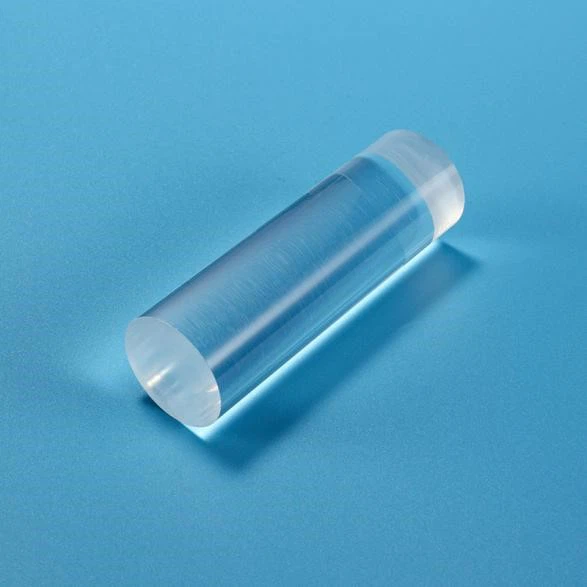
Quartz rods, which can be made from quartz ingot, have their own set of applications in the electronics industry. They are often used as support structures in electronic devices, providing mechanical stability and protection for other components. For example, in some high - power electronic devices, quartz rods can be used to hold and position heat - sensitive components, ensuring proper heat dissipation and preventing damage from mechanical vibrations.
Quartz rods also have optical properties that make them useful in certain optical applications within electronics. They can be used as light guides or lenses in some specialized electronic devices, such as sensors and imaging systems. To learn more about quartz rods, you can visit Quartz Rod.
Advantages of Using Quartz Ingot in Electronics
- High Purity: Quartz ingot can be produced with extremely high purity levels, which is essential for applications where even the slightest impurity can affect the performance of electronic devices.
- Thermal Stability: It can withstand high temperatures without significant degradation, making it suitable for use in high - temperature processes such as semiconductor manufacturing.
- Piezoelectric Property: The piezoelectric effect in quartz allows for the creation of stable and accurate frequency sources, which are crucial for many electronic applications.
- Optical Properties: Quartz has excellent optical properties, including low attenuation and high transparency, making it ideal for optical fiber and other optical applications.
- Mechanical Strength: It has good mechanical strength and flexibility, which is important for ensuring the durability and reliability of electronic components.
Conclusion
In conclusion, quartz ingot is a versatile and indispensable material in the electronics industry. Its unique properties make it suitable for a wide range of applications, from semiconductor manufacturing to optical fiber production. As technology continues to advance, the demand for high - quality quartz ingot is only expected to grow.
If you're in the electronics industry and are looking for a reliable supplier of quartz ingot, I'd be more than happy to discuss your requirements. Whether you need quartz ingot for semiconductor manufacturing, oscillator production, or any other electronic application, we can provide you with high - quality products that meet your specifications. Contact us today to start a discussion about your procurement needs and explore how our quartz ingot can enhance the performance of your electronic devices.
References
- "Handbook of Semiconductor Manufacturing Technology" by Yung - Ching Chang
- "Optical Fiber Communications" by Gerd Keiser
- "Piezoelectricity: An Introduction to the Theory and Applications of Electromechanical Phenomena in Crystals" by Walter G. Cady


