

What is the difference between quartz tubes for different industries?
Leave a message

As a supplier of quartz tubes, I've had the privilege of witnessing firsthand the diverse applications and unique requirements of different industries. Quartz tubes are remarkable products known for their exceptional properties, such as high temperature resistance, excellent transparency, and chemical inertness. However, the specific needs of each industry can lead to significant differences in the design, manufacturing, and performance of quartz tubes. In this blog, I'll explore these differences to provide a better understanding of how quartz tubes are tailored to meet the demands of various sectors.
Semiconductor Industry
The semiconductor industry is one of the most demanding consumers of quartz tubes. In semiconductor manufacturing processes, such as chemical vapor deposition (CVD) and diffusion, quartz tubes are used as reaction chambers. These tubes must maintain extremely high purity levels to prevent contamination of the semiconductor wafers. Even the slightest impurity can lead to defects in the semiconductor devices, resulting in reduced performance or complete failure.
Quartz tubes for the semiconductor industry are typically made from high - purity synthetic quartz. This type of quartz has a very low content of metal impurities and hydroxyl groups. The manufacturing process is highly controlled, often involving techniques like vapor deposition to ensure a uniform and pure structure. The tubes also need to have excellent dimensional stability to maintain precise process conditions. For example, in a CVD process, the temperature and gas flow inside the tube must be precisely regulated, and any deviation in the tube's dimensions can affect the quality of the deposited film.
Lighting Industry
In the lighting industry, quartz tubes are widely used in halogen lamps and high - intensity discharge (HID) lamps. The key requirement for quartz tubes in lighting applications is their ability to withstand high temperatures and transmit light efficiently. Halogen lamps operate at very high temperatures, and the quartz tube must be able to resist thermal shock and maintain its integrity.
The transparency of the quartz tube is crucial for lighting applications. A high - quality quartz tube should have minimal absorption and scattering of light, allowing the maximum amount of light to be emitted from the lamp. Some quartz tubes used in lighting are also treated to enhance their UV - blocking properties. This is important for applications where UV radiation needs to be minimized, such as in display lighting or in environments where UV can damage sensitive materials.
Medical and Laboratory Industry
In the medical and laboratory fields, quartz tubes serve a variety of purposes. For instance, Quartz Stirring Tube are used in chemical reactions and sample preparation. These tubes need to be chemically inert to avoid reacting with the substances being processed. They also need to be able to withstand a wide range of temperatures and pressures during different laboratory procedures.
Sealed Bottom Tube are commonly used for storing and transporting samples. The seal must be airtight to prevent contamination and evaporation of the samples. In addition, quartz tubes used in medical applications, such as in ultraviolet (UV) sterilization devices, need to have specific optical properties. Quartz Ultraviolet Sterilization Tubes are designed to efficiently transmit UV light, which is used to kill bacteria and viruses. The quartz material must be able to withstand the high - energy UV radiation without significant degradation over time.
Solar Energy Industry
The solar energy industry also relies on quartz tubes, particularly in solar thermal collectors. In these applications, quartz tubes are used to absorb sunlight and convert it into heat. The tubes need to have high solar absorption coefficients to capture as much sunlight as possible. They also need to be highly resistant to environmental factors such as moisture, dust, and temperature variations.
The thermal insulation properties of quartz tubes are important in solar thermal collectors. A good insulation design can help to reduce heat loss and improve the overall efficiency of the collector. Some quartz tubes used in solar applications are coated with special materials to enhance their absorption and reflection properties, further optimizing the energy conversion process.
Glass and Ceramics Industry
In the glass and ceramics industry, quartz tubes are used in melting furnaces and annealing processes. The tubes need to withstand extremely high temperatures, often exceeding 1000°C. They must also be resistant to corrosion from molten glass and ceramic materials.
The mechanical strength of quartz tubes is crucial in these applications. The tubes need to support their own weight and the weight of the materials inside them without breaking. In addition, the thermal expansion coefficient of the quartz tube must be carefully matched to the materials being processed to avoid thermal stress and cracking.
Differences in Manufacturing Processes
The differences in the requirements of different industries also lead to variations in the manufacturing processes of quartz tubes. For industries that require high - purity quartz tubes, such as the semiconductor industry, the manufacturing process often involves multiple purification steps. Synthetic quartz is typically produced by vapor - phase deposition methods, which can achieve very high purity levels.
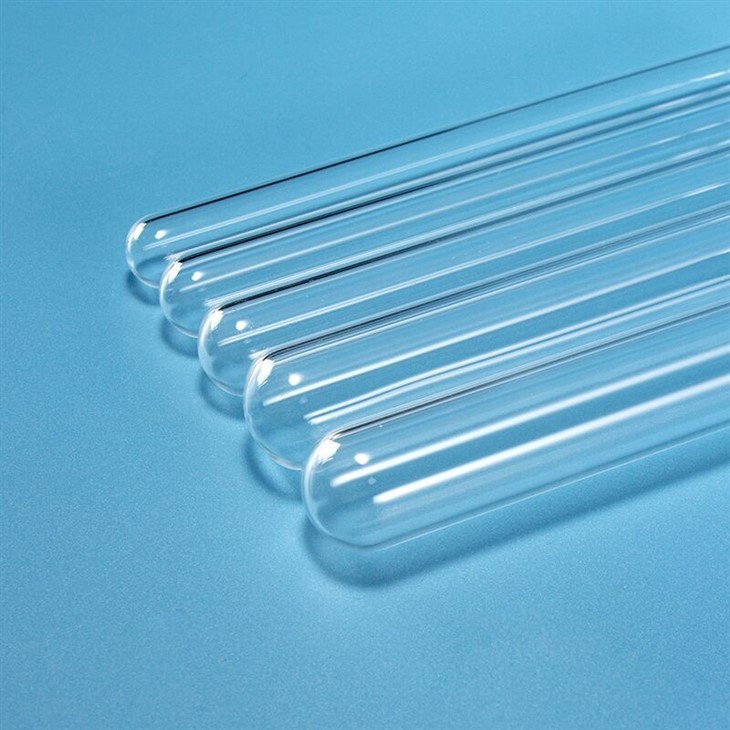

In contrast, for industries where cost is a more significant factor, such as the lighting industry, more cost - effective manufacturing methods may be used. These methods may involve melting natural quartz and shaping it into tubes using extrusion or drawing processes.
The shaping and finishing processes also vary depending on the application. For example, quartz tubes used in precision instruments may require very precise machining and polishing to achieve the required dimensional accuracy and surface finish. On the other hand, tubes used in less critical applications may have a more basic finish.
Conclusion
In conclusion, the differences in quartz tubes for different industries are significant and are driven by the specific requirements of each sector. Whether it's the high - purity needs of the semiconductor industry, the optical properties required for lighting, the chemical inertness needed in medical applications, or the high - temperature resistance in the glass and ceramics industry, quartz tubes are carefully designed and manufactured to meet these diverse demands.
If you are in need of quartz tubes for your specific industry, I encourage you to reach out to discuss your requirements. Our team of experts can provide you with the right quartz tube solutions tailored to your needs. We are committed to delivering high - quality products and excellent customer service. Let's start a conversation about how we can meet your quartz tube procurement needs.
References
- "Quartz Materials and Their Applications" by Smith, J. (2018)
- "Handbook of Semiconductor Manufacturing Technology" edited by Chang, S. M. (2019)
- "Lighting Technology and Applications" by Jones, R. (2020)
- "Medical Laboratory Techniques and Instrumentation" by Brown, A. (2021)
- "Solar Energy Systems and Technologies" by Green, M. (2022)
- "Glass and Ceramics Manufacturing Processes" by White, L. (2023)


