

What is the frictional coefficient of a sealed bottom tube?
Leave a message

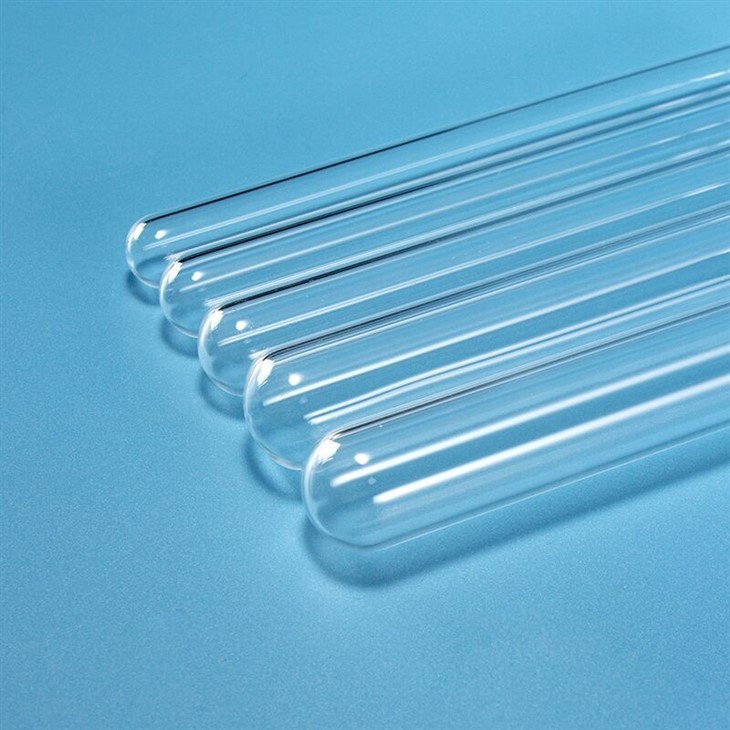
As a supplier of Sealed Bottom Tubes, I often encounter various inquiries regarding the technical aspects of our products. One question that frequently comes up is, "What is the frictional coefficient of a sealed bottom tube?" In this blog, we will explore this topic in depth, shedding light on the factors that influence the frictional coefficient and its implications in different applications.
Understanding the Frictional Coefficient
The frictional coefficient, also known as the coefficient of friction, is a dimensionless quantity that represents the ratio of the force of friction between two surfaces in contact to the normal force pressing the two surfaces together. It is a fundamental property that describes the resistance to relative motion between two objects. In the context of a sealed bottom tube, the frictional coefficient is crucial as it affects how the tube interacts with other components in a system, such as when it is inserted into a holder or when it slides against a surface during a manufacturing or experimental process.

Factors Affecting the Frictional Coefficient of Sealed Bottom Tubes
Material Composition
The material from which the sealed bottom tube is made plays a significant role in determining its frictional coefficient. For example, tubes made of glass, such as quartz, have different surface properties compared to those made of plastic or metal. Quartz is a hard and smooth material, which generally results in a lower frictional coefficient. This smoothness is due to the regular atomic structure of quartz, which provides fewer irregularities for other surfaces to catch on. On the other hand, plastic tubes may have a higher frictional coefficient, depending on the type of plastic and its surface finish. Some plastics can be made with additives or surface treatments to reduce friction, but in general, they tend to have more surface roughness compared to quartz.
Our company offers a wide range of Quartz Tubes, including Quartz Ultraviolet Sterilization Tubes and Quartz Stirring Tube, which are known for their low frictional coefficients and high chemical resistance.
Surface Finish
The surface finish of the sealed bottom tube is another important factor. A polished surface will have a lower frictional coefficient than a rough or textured surface. During the manufacturing process, tubes can be subjected to various finishing treatments, such as grinding, polishing, or coating. Polishing the tube surface can remove any microscopic irregularities, resulting in a smoother surface and reduced friction. Coating the tube with a low-friction material, such as a silicone or Teflon-based coating, can also significantly lower the frictional coefficient. However, it is important to ensure that the coating does not affect the other properties of the tube, such as its chemical resistance or optical transparency.
Environmental Conditions
The environmental conditions in which the sealed bottom tube operates can also affect its frictional coefficient. Temperature, humidity, and the presence of contaminants can all have an impact. For example, at high temperatures, the material of the tube may expand, which can change the surface contact area and the frictional forces. In humid environments, moisture can act as a lubricant, reducing the frictional coefficient. However, if the moisture contains contaminants or if it causes corrosion on the tube surface, it can increase friction. Additionally, the presence of dust, particles, or chemicals on the tube surface can increase the frictional coefficient by creating additional points of contact and resistance.
Measuring the Frictional Coefficient of Sealed Bottom Tubes
There are several methods available for measuring the frictional coefficient of sealed bottom tubes. One common method is the inclined plane method. In this method, the tube is placed on an inclined plane, and the angle of the plane is gradually increased until the tube starts to slide. The frictional coefficient can then be calculated using the tangent of the angle at which sliding occurs. Another method is the use of a tribometer, which is a device specifically designed to measure friction and wear. A tribometer can apply a controlled force to the tube and measure the frictional force as the tube moves against a surface. This method provides more accurate and detailed information about the frictional properties of the tube.
Implications of the Frictional Coefficient in Different Applications
Laboratory Applications
In laboratory settings, sealed bottom tubes are commonly used for various experiments and analyses. The frictional coefficient of the tube can affect the accuracy and reproducibility of the results. For example, in a pipetting operation, a tube with a high frictional coefficient may cause the pipette tip to stick to the tube wall, leading to inaccurate volume measurements. On the other hand, a tube with a low frictional coefficient allows for smooth and easy insertion and removal of the pipette tip, ensuring precise and consistent results. Additionally, in centrifugation processes, the frictional coefficient can affect the stability of the tubes in the centrifuge rotor. Tubes with a suitable frictional coefficient are less likely to move or shift during high-speed rotation, reducing the risk of sample spillage or damage.
Industrial Applications
In industrial applications, sealed bottom tubes are used in a wide range of processes, such as chemical processing, food and beverage production, and pharmaceutical manufacturing. The frictional coefficient of the tubes can impact the efficiency and productivity of these processes. For example, in a filling operation, tubes with a low frictional coefficient can be filled more quickly and accurately, as the product can flow smoothly into the tube without getting stuck or causing blockages. In conveyor systems, the frictional coefficient of the tubes determines how easily they can be transported along the conveyor belt. Tubes with a proper frictional coefficient can be moved efficiently without slipping or causing jams, reducing downtime and increasing overall production output.
Conclusion
In conclusion, the frictional coefficient of a sealed bottom tube is an important property that is influenced by factors such as material composition, surface finish, and environmental conditions. Understanding the frictional coefficient is crucial for ensuring the proper functioning of the tubes in different applications, whether in the laboratory or in industrial settings. As a supplier of Sealed Bottom Tubes, we are committed to providing high-quality products with consistent and reliable frictional properties. If you have any questions or are interested in purchasing our Sealed Bottom Tubes, please feel free to contact us for further discussion and procurement negotiation.
References
- Bowden, F. P., & Tabor, D. (1950). The Friction and Lubrication of Solids. Oxford University Press.
- Bhushan, B. (2013). Introduction to Tribology. Wiley.
- Rabinowicz, E. (1995). Friction and Wear of Materials. Wiley.


