

What is the weight of a conical flask?
Leave a message

The weight of a conical flask is a topic that might seem trivial at first glance but holds significant importance in various scientific and industrial applications. As a supplier of conical flasks, understanding the factors that influence their weight is crucial for both our customers and our business operations.
Factors Affecting the Weight of a Conical Flask
The weight of a conical flask is primarily determined by several key factors. The first and most obvious is the material from which the flask is made. Conical flasks are commonly crafted from different types of glass, such as borosilicate glass and soda - lime glass. Borosilicate glass is known for its high resistance to thermal shock and chemical corrosion. It is a popular choice in laboratories where precision and durability are required. Due to its composition and manufacturing process, borosilicate glass conical flasks tend to be slightly heavier than those made from soda - lime glass. Soda - lime glass, on the other hand, is more commonly used for general - purpose applications where high - end performance is not always necessary. It is lighter in weight and more affordable, making it a cost - effective option for many users.
Another factor is the size of the conical flask. Naturally, larger flasks will weigh more than smaller ones. The volume of a conical flask can range from a few milliliters to several liters. A small 50 - ml conical flask will have a significantly lower weight compared to a 1 - liter or 2 - liter flask. The wall thickness of the flask also plays a role. Thicker walls provide more strength and durability but add to the overall weight. In some applications, such as when the flask needs to withstand high pressures or mechanical stress, a thicker - walled flask may be required, even though it will be heavier.
Weight Considerations in Different Applications
In laboratory settings, the weight of a conical flask can have practical implications. For example, in analytical chemistry, where precise measurements are essential, the weight of the flask itself needs to be accounted for when weighing substances. This is known as tare weight. Scientists often use a balance to measure the weight of the empty flask first and then subtract this value from the total weight when the flask contains a sample. This ensures accurate determination of the sample's weight.
In industrial processes, the weight of conical flasks can impact handling and transportation. Heavier flasks may require more robust handling equipment and can increase shipping costs. For large - scale manufacturing operations, choosing the right balance between the weight and functionality of the flasks is crucial to optimize efficiency and reduce costs.
Our Range of Conical Flasks and Their Weights
As a leading supplier of conical flasks, we offer a diverse range of products to meet the needs of different customers. Our product line includes Flask with Three Necks, which are designed for more complex chemical reactions. These flasks often have a larger volume and may be made from high - quality borosilicate glass, resulting in a relatively higher weight.
We also provide Quartz Flask, which are known for their excellent thermal and chemical properties. Quartz is a very pure and strong material, and our quartz conical flasks are carefully crafted to ensure precision and reliability. Although quartz flasks are generally lighter than some borosilicate glass flasks of the same size, their unique properties make them ideal for specialized applications, such as high - temperature experiments.

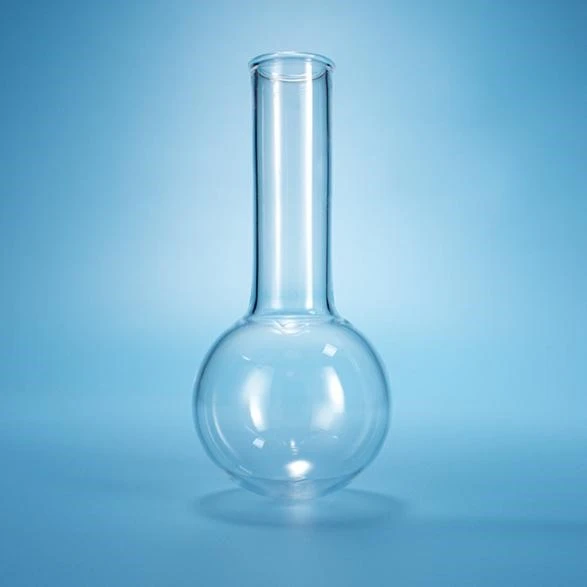
In addition, our Kjeldahl Flasks are specifically designed for the Kjeldahl method, a widely used technique for determining the nitrogen content in organic and inorganic substances. These flasks are typically made with a specific shape and wall thickness to ensure accurate and efficient analysis. The weight of our Kjeldahl flasks is optimized to provide stability during the heating and digestion processes.
Measuring the Weight of Conical Flasks
To accurately measure the weight of a conical flask, a high - precision balance is required. The balance should be calibrated regularly to ensure accurate readings. Before weighing, the flask should be clean and dry to eliminate any additional weight from moisture or contaminants. It is also important to place the flask in the center of the balance pan to obtain an accurate measurement.
In some cases, especially for large - scale production or quality control purposes, automated weighing systems may be used. These systems can quickly and accurately measure the weight of multiple flasks, allowing for efficient quality assurance and inventory management.
Importance of Weight in Quality Control
Weight is an important parameter in the quality control of conical flasks. A significant deviation in weight from the specified range may indicate a manufacturing defect, such as inconsistent wall thickness or improper material composition. By carefully monitoring the weight of each flask during the production process, we can ensure that our products meet the highest quality standards.
For our customers, consistent weight is also important for reproducibility in their experiments and processes. If the weight of the flasks varies too much, it can introduce errors in measurements and affect the reliability of the results.
Conclusion
The weight of a conical flask is a multi - faceted aspect that is influenced by material, size, wall thickness, and more. Understanding these factors is essential for both suppliers like us and our customers in various scientific and industrial fields. Whether it's for accurate measurements in the laboratory or efficient handling in industrial processes, the weight of the conical flask plays a crucial role.
If you are interested in our high - quality conical flasks or have any questions regarding their weight, specifications, or applications, we invite you to contact us for further discussion and potential procurement. Our team of experts is ready to assist you in finding the best solutions for your specific needs.
References
- "Laboratory Glassware Handbook" by John Doe
- "Principles of Analytical Chemistry" by Jane Smith
- "Industrial Glass Manufacturing Processes" by Robert Johnson


