

What materials are laboratory glassware usually made of?
Leave a message

Laboratory glassware is an essential component in scientific research, industrial production, and educational institutions. It plays a crucial role in various experiments, analyses, and processes due to its unique properties. As a laboratory glassware supplier, I am often asked about the materials used to make these vital tools. In this blog post, I will delve into the common materials employed in the production of laboratory glassware, their characteristics, and applications.
Borosilicate Glass
Borosilicate glass is one of the most widely used materials for laboratory glassware. It is composed of silica (SiO₂), boron trioxide (B₂O₃), and small amounts of other oxides such as sodium oxide (Na₂O) and aluminum oxide (Al₂O₃). The addition of boron trioxide gives borosilicate glass its exceptional thermal and chemical resistance properties.
Characteristics
- Thermal Resistance: Borosilicate glass has a low coefficient of thermal expansion, which means it can withstand rapid temperature changes without cracking or shattering. This property makes it ideal for use in applications where heating or cooling is required, such as in test tubes, flasks, and beakers.
- Chemical Resistance: It is highly resistant to most chemicals, including acids, bases, and organic solvents. This resistance ensures that the glassware does not react with the substances being tested or stored, maintaining the integrity of the experiment or sample.
- Transparency: Borosilicate glass is transparent, allowing for easy observation of the contents inside the glassware. This transparency is essential for accurate measurement and analysis.
Applications
- General Laboratory Use: Borosilicate glass is commonly used in everyday laboratory equipment such as beakers, flasks, test tubes, and pipettes. Its thermal and chemical resistance make it suitable for a wide range of experiments and procedures.
- Heating Applications: It is the material of choice for glassware used in heating applications, such as round-bottom flasks, Erlenmeyer flasks, and boiling tubes. These flasks can be directly heated on a Bunsen burner or in a heating mantle without the risk of breakage.
Soda-Lime Glass
Soda-lime glass is another commonly used material for laboratory glassware. It is made from a mixture of silica, soda (sodium carbonate, Na₂CO₃), and lime (calcium oxide, CaO).
Characteristics
- Low Cost: Soda-lime glass is relatively inexpensive to produce, making it a cost-effective option for many laboratory applications.
- Good Workability: It is easy to shape and form, allowing for the production of a wide variety of glassware shapes and sizes.
- Lower Thermal and Chemical Resistance: Compared to borosilicate glass, soda-lime glass has lower thermal and chemical resistance. It is more prone to thermal shock and may react with certain chemicals, especially strong acids and bases.
Applications
- Disposable Glassware: Soda-lime glass is often used for disposable laboratory glassware such as culture tubes, Petri dishes, and pipettes. These items are used once and then discarded, so the lower cost is an advantage.
- Non-Critical Applications: It is suitable for non-critical applications where thermal and chemical resistance are not the primary concerns, such as storing non-reactive substances or as a container for visual observation.
Quartz Glass
Quartz glass, also known as fused silica, is made from pure silicon dioxide (SiO₂). It is a high-performance material with exceptional properties.
Characteristics
- High Purity: Quartz glass has a very high purity, with minimal impurities. This purity makes it suitable for applications where contamination must be avoided, such as in semiconductor manufacturing and high-precision analytical chemistry.
- Excellent Thermal Resistance: It can withstand extremely high temperatures, up to 1,100°C (2,012°F) for continuous use and even higher for short periods. This thermal resistance makes it ideal for use in high-temperature applications.
- Low Thermal Expansion: Similar to borosilicate glass, quartz glass has a very low coefficient of thermal expansion, making it resistant to thermal shock.
- High Chemical Resistance: It is highly resistant to most chemicals, including hydrofluoric acid, which can etch other types of glass.
Applications
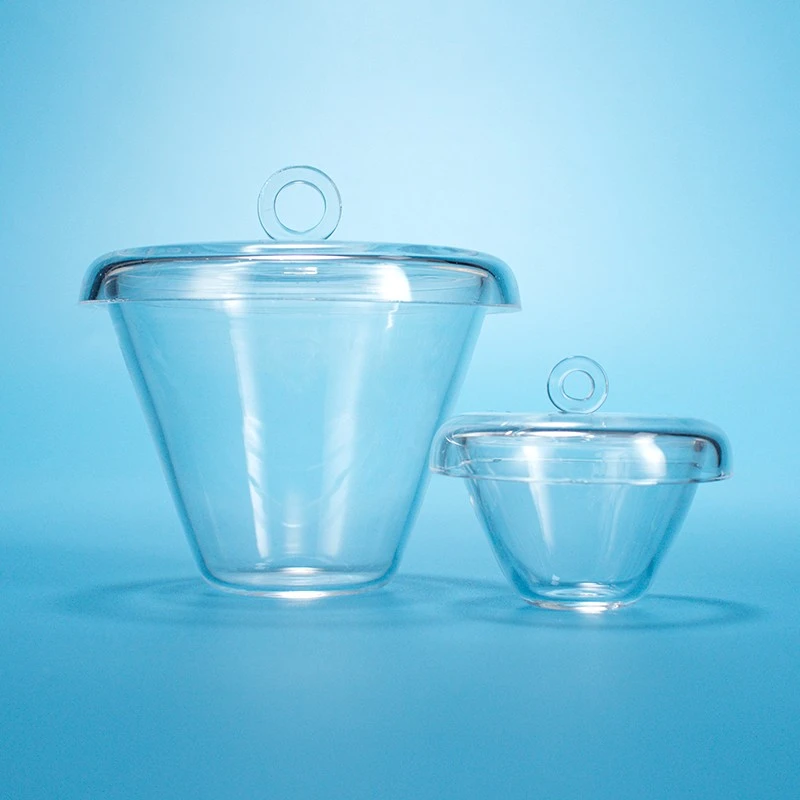
- High-Temperature Applications: Quartz glass is used in applications where high temperatures are involved, such as in furnaces, crucibles, and heating elements. For example, the Quartz Crucible is a popular choice for melting and analyzing high-temperature materials.
- Optical Applications: Its high transparency in the ultraviolet, visible, and infrared regions makes it suitable for optical applications such as lenses, prisms, and windows. Quartz Watch Glasses are often used in laboratories for covering beakers and evaporating dishes while allowing for visual inspection.
- Chemical Analysis: Quartz glass is used in chemical analysis equipment, such as spectrometers and chromatography columns, due to its high purity and chemical resistance.
Fluoride Glass
Fluoride glass is a type of glass that contains fluoride compounds. It has unique optical and chemical properties.
Characteristics
- Low Refractive Index: Fluoride glass has a low refractive index, which makes it useful for optical applications where minimizing light reflection and dispersion is important.
- Good Transparency in the Infrared Region: It has excellent transparency in the infrared region, making it suitable for infrared optics and telecommunications applications.
- Chemical Reactivity: Fluoride glass is more chemically reactive than other types of glass, especially with water and certain chemicals. It requires special handling and storage conditions.
Applications
- Infrared Optics: Fluoride glass is used in infrared lenses, windows, and fibers for applications such as night vision devices, thermal imaging cameras, and infrared spectroscopy.
- Telecommunications: It is used in optical fibers for long-distance telecommunications due to its low attenuation in the infrared region.
Pyrex Glass
Pyrex is a brand name for a type of borosilicate glass. It was originally developed by Corning Glass Works in the early 20th century and has become a well-known and trusted name in laboratory glassware.
Characteristics
- Same Properties as Borosilicate Glass: Pyrex glass has the same thermal and chemical resistance properties as other borosilicate glasses. It is known for its durability and reliability.
- Brand Recognition: The Pyrex brand is widely recognized and trusted in the laboratory community, which gives customers confidence in the quality of the glassware.
Applications
- General Laboratory Use: Pyrex glass is used in a variety of laboratory applications, similar to other borosilicate glasses. It is commonly found in beakers, flasks, and test tubes.
Choosing the Right Material
When choosing laboratory glassware, it is important to consider the specific requirements of the application. Factors such as temperature, chemical compatibility, cost, and transparency should be taken into account.
- Temperature Requirements: If the glassware will be exposed to high temperatures, borosilicate or quartz glass may be the best choice. Soda-lime glass is not suitable for high-temperature applications due to its lower thermal resistance.
- Chemical Compatibility: For applications involving strong acids, bases, or other reactive chemicals, borosilicate or quartz glass is recommended. Soda-lime glass may react with certain chemicals and should be used with caution.
- Cost: If cost is a major consideration, soda-lime glass may be a suitable option for non-critical applications or disposable glassware. Borosilicate and quartz glass are more expensive but offer better performance.
- Transparency and Purity: For applications where transparency and purity are important, such as in optical or high-precision analytical applications, quartz glass is the preferred choice.
As a laboratory glassware supplier, we offer a wide range of glassware made from different materials to meet the diverse needs of our customers. Whether you need borosilicate glass beakers for general laboratory use, soda-lime glass Petri dishes for disposable applications, or high-quality quartz glass crucibles for high-temperature experiments, we have the products you need.

If you are interested in purchasing laboratory glassware or have any questions about the materials and applications, please feel free to contact us. We are here to help you find the right glassware for your specific requirements. Our team of experts can provide you with detailed information and guidance to ensure that you make the best choice for your laboratory.
References
- "Glass Science and Technology" by David R. Uhlmann and Neil J. Kreidl
- "Handbook of Laboratory Glassware" by various authors
- Manufacturer's technical data sheets for different types of laboratory glassware


