

Can quartz rods be used in corrosive environments?
Leave a message

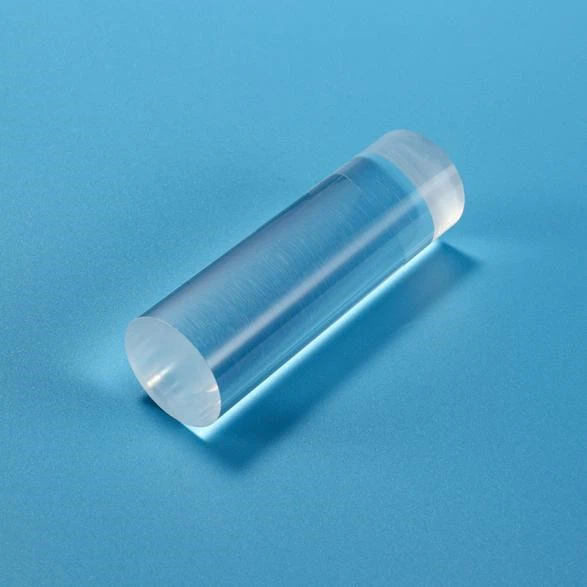
Quartz rods are a remarkable material with a wide range of applications, but one question that frequently arises is whether they can be used in corrosive environments. As a reputable Quartz Rod supplier, I am here to provide you with in - depth insights into this topic.
The Chemical Composition and Properties of Quartz Rods
Quartz rods are primarily composed of silicon dioxide (SiO₂). This chemical structure gives quartz rods several key properties that are relevant to their performance in corrosive environments. First of all, quartz has a very high melting point, typically around 1713°C. This high - temperature resistance is often associated with good chemical stability.
Quartz rods also have excellent electrical insulation properties, which make them suitable for many high - tech applications. In terms of physical structure, the crystalline nature of quartz gives it a dense and ordered atomic arrangement. This structure limits the penetration of corrosive agents into the material.
Resistance to Different Types of Corrosive Agents
Acid Resistance
Quartz rods exhibit excellent resistance to most acids. Hydrochloric acid (HCl), sulfuric acid (H₂SO₄), and nitric acid (HNO₃) have little to no effect on quartz rods under normal conditions. For example, in laboratory settings where these acids are commonly used, quartz rods can be safely employed in equipment such as reaction vessels and distillation columns. The strong Si - O bonds in quartz are not easily broken by the relatively weak acid - based chemical reactions.
However, hydrofluoric acid (HF) is an exception. Hydrofluoric acid can react with silicon dioxide in quartz rods according to the following chemical equation: SiO₂ + 4HF = SiF₄↑+ 2H₂O. This reaction results in the dissolution of the quartz rod, making it crucial to avoid using quartz rods in environments where hydrofluoric acid is present.
Alkali Resistance
Quartz rods also show good resistance to alkalis, but to a lesser extent than acids. In dilute alkali solutions, quartz rods can maintain their integrity for a relatively long time. But in concentrated alkali solutions, especially at high temperatures, the Si - O bonds in quartz can be attacked by hydroxide ions (OH⁻). The reaction between quartz and alkalis can lead to the formation of silicate salts, which may cause the surface of the quartz rod to become rough and eventually lead to degradation of the material over time.
Oxidizing and Reducing Environments
In oxidizing environments, quartz rods are generally stable. The silicon dioxide in quartz is already in a highly oxidized state, so it is not easily further oxidized by common oxidizing agents such as oxygen, hydrogen peroxide, and ozone. In reducing environments, quartz rods also tend to be stable because the strong Si - O bonds are not readily broken by reducing agents.
Factors Affecting the Performance of Quartz Rods in Corrosive Environments
Temperature
Temperature plays a crucial role in the corrosion resistance of quartz rods. As the temperature increases, the chemical reactivity of corrosive agents generally increases. For example, while quartz rods can withstand dilute alkali solutions at room temperature, at high temperatures, the reaction rate between the alkali and the quartz rod accelerates significantly. High - temperature environments can also cause thermal stress in the quartz rod, which may lead to cracking and make the material more susceptible to corrosion.
Concentration of Corrosive Agents
The concentration of corrosive agents is another important factor. Higher concentrations of acids or alkalis are more likely to cause corrosion of quartz rods. Even though quartz rods are resistant to many acids and alkalis, a highly concentrated solution can overcome the inherent chemical stability of the material over time.

Duration of Exposure
The longer the quartz rod is exposed to a corrosive environment, the greater the chance of corrosion. Prolonged exposure allows more time for the corrosive agents to react with the quartz rod, leading to more significant damage.
Applications of Quartz Rods in Corrosive Environments
Despite the limitations in some extreme corrosive conditions, quartz rods have many applications in moderately corrosive environments.
In the semiconductor industry, quartz rods are used in the manufacturing process where they may be exposed to various chemicals. The high purity and corrosion resistance of quartz rods make them ideal for use in diffusion furnaces and wafer handling equipment.
In the chemical industry, quartz rods are used in distillation and evaporation processes. They can withstand the corrosive effects of many organic and inorganic chemicals, ensuring the long - term operation of the equipment.
Raw Materials and Production of Quartz Rods
To ensure the best performance of quartz rods in corrosive environments, the quality of the raw materials is of utmost importance. The Raw Material Of Quartz Plate used in the production of quartz rods needs to be of high purity. High - purity quartz ingots are often used as the starting material. You can learn more about Quartz Ingot on our website.
The production process of quartz rods also affects their corrosion resistance. Advanced manufacturing techniques can ensure a more uniform structure and fewer defects in the quartz rod, which in turn enhances its ability to resist corrosion.
Conclusion
In conclusion, quartz rods can be used in many corrosive environments, but their performance depends on the type, concentration, and temperature of the corrosive agents, as well as the duration of exposure. While they are highly resistant to most acids and many alkalis, they are vulnerable to hydrofluoric acid and concentrated alkalis at high temperatures.
As a Quartz Rod supplier, we are committed to providing high - quality quartz rods that meet the requirements of various applications, including those in corrosive environments. Our Quartz Rod products are carefully manufactured to ensure excellent corrosion resistance and other performance characteristics.
If you are interested in purchasing quartz rods for your specific application, especially in corrosive environments, please feel free to contact us for more information and to start a procurement negotiation. We have a team of experts who can provide you with detailed technical support and help you select the most suitable quartz rod products for your needs.
References
- "Handbook of Chemistry and Physics", CRC Press.
- "Introduction to Materials Science for Engineers", James F. Shackelford.
- Industry reports on the application of quartz materials in corrosive environments.


