

Can quartz sand be used in the production of adhesives?
Leave a message

Quartz sand, a versatile and widely used material, has found its way into numerous industries due to its unique physical and chemical properties. As a quartz sand supplier, I am often asked about the potential applications of quartz sand, and one question that frequently arises is whether quartz sand can be used in the production of adhesives. In this blog post, we will explore the feasibility of using quartz sand in adhesive production, examining its properties, benefits, and potential challenges.
Properties of Quartz Sand
Quartz sand is primarily composed of silicon dioxide (SiO₂), which gives it several advantageous properties. It has high hardness, with a Mohs hardness of about 7, making it resistant to abrasion. This hardness ensures that in any application where the material is subject to wear, it can maintain its integrity. Quartz sand also has excellent chemical stability, being resistant to most acids and alkalis. This property makes it suitable for use in environments where chemical resistance is crucial.
In addition, quartz sand has a relatively high melting point (around 1713°C), which provides thermal stability. It also has low thermal expansion, meaning it does not expand or contract significantly with temperature changes. These thermal properties are important in applications where the material needs to withstand high temperatures or temperature fluctuations without deforming.

Benefits of Using Quartz Sand in Adhesive Production
1. Reinforcement
One of the main benefits of incorporating quartz sand into adhesives is reinforcement. The high - hardness and abrasion - resistant nature of quartz sand can enhance the mechanical properties of the adhesive. When used as a filler, quartz sand can increase the strength and durability of the adhesive bond. For example, in structural adhesives used in construction or automotive applications, the addition of quartz sand can improve the adhesive's ability to withstand shear and tensile forces.
2. Chemical Resistance
As mentioned earlier, quartz sand is chemically stable. When added to adhesives, it can improve the chemical resistance of the adhesive. This is particularly useful in applications where the adhesive will be exposed to harsh chemicals, such as in the chemical processing industry or in outdoor environments where the adhesive may come into contact with pollutants.
3. Thermal Stability
The thermal properties of quartz sand can also be beneficial in adhesive production. Adhesives used in high - temperature applications, such as in the aerospace or electronics industries, require good thermal stability. The low thermal expansion and high melting point of quartz sand can help the adhesive maintain its bond strength and integrity at elevated temperatures.
4. Adjusting Viscosity
Quartz sand can be used to adjust the viscosity of adhesives. By varying the amount and particle size of the quartz sand added, the flow properties of the adhesive can be controlled. This is important in different application scenarios. For example, in some applications, a more viscous adhesive is required to prevent it from dripping or flowing, while in others, a lower - viscosity adhesive may be needed for better spreading.
Challenges and Considerations
1. Particle Size and Distribution
The particle size and distribution of quartz sand can significantly affect the performance of the adhesive. If the particles are too large, they may cause problems such as poor dispersion in the adhesive matrix, leading to uneven properties and potential weak points in the bond. On the other hand, if the particles are too small, they may increase the viscosity of the adhesive too much, making it difficult to apply. Therefore, careful selection of the appropriate particle size and distribution is crucial.
2. Compatibility
Ensuring the compatibility of quartz sand with the adhesive matrix is essential. Different adhesives have different chemical compositions, and the surface properties of quartz sand need to be considered. In some cases, surface treatment of the quartz sand may be required to improve its compatibility with the adhesive, such as silane coupling agents to enhance the bonding between the quartz sand and the polymer in the adhesive.
3. Sedimentation
Quartz sand, being a solid filler, has a tendency to sediment in the adhesive over time. This can lead to non - uniform distribution of the filler in the adhesive, affecting its performance. To prevent sedimentation, proper mixing and storage conditions need to be established, and in some cases, anti - sedimentation agents may be added.
Applications of Adhesives with Quartz Sand
1. Construction
In the construction industry, adhesives with quartz sand can be used for tile bonding, stone installation, and structural repairs. The reinforcement and chemical resistance provided by quartz sand make these adhesives suitable for withstanding the harsh conditions in construction sites, such as exposure to moisture, chemicals, and mechanical stress.
2. Automotive
Automotive adhesives often require high strength and durability. Quartz sand - filled adhesives can be used for bonding body panels, attaching trim components, and in engine and transmission applications where thermal stability and chemical resistance are important.
3. Electronics
In the electronics industry, adhesives are used for component mounting, encapsulation, and heat dissipation. The thermal stability and low thermal expansion of quartz sand - filled adhesives make them suitable for use in electronic devices that generate heat, such as computers and mobile phones.
Our Quartz Sand Products
As a quartz sand supplier, we offer high - quality quartz sand products that are suitable for adhesive production. Our quartz sand is carefully processed to ensure the desired particle size and distribution. We also provide technical support to help our customers select the most appropriate quartz sand for their specific adhesive applications.
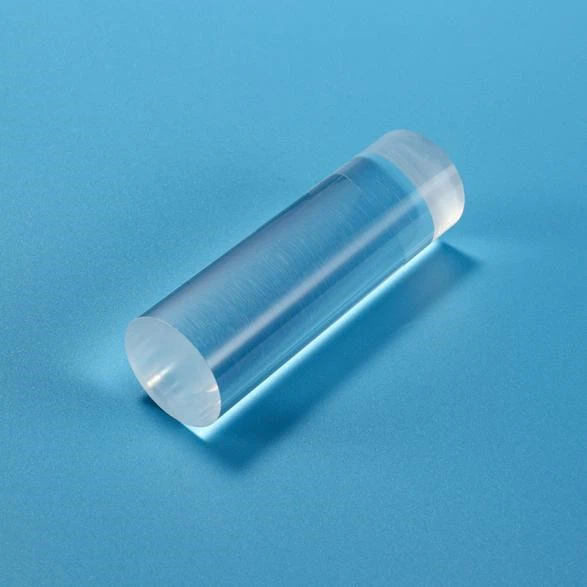
If you are interested in our Quartz Sand, we also have related products such as Quartz Rod and Quartz Ingot that may be of interest to you in your adhesive - related or other industrial applications.
Conclusion
In conclusion, quartz sand can indeed be used in the production of adhesives, offering numerous benefits such as reinforcement, chemical resistance, thermal stability, and viscosity adjustment. However, challenges such as particle size control, compatibility, and sedimentation need to be carefully addressed. With proper selection and processing, quartz sand - filled adhesives can find wide applications in various industries.
If you are considering using quartz sand in your adhesive production or have any questions about our quartz sand products, we encourage you to contact us for further discussions and potential procurement. We are committed to providing you with the best solutions and high - quality products to meet your specific needs.
References
- "Handbook of Adhesive Technology" by A. Pizzi and K. L. Mittal
- "Quartz and Silica Sand: Geology, Exploration, and Beneficiation" by R. P. Sheppard


