

Can Sapphire Wafers be used in aerospace applications?
Leave a message

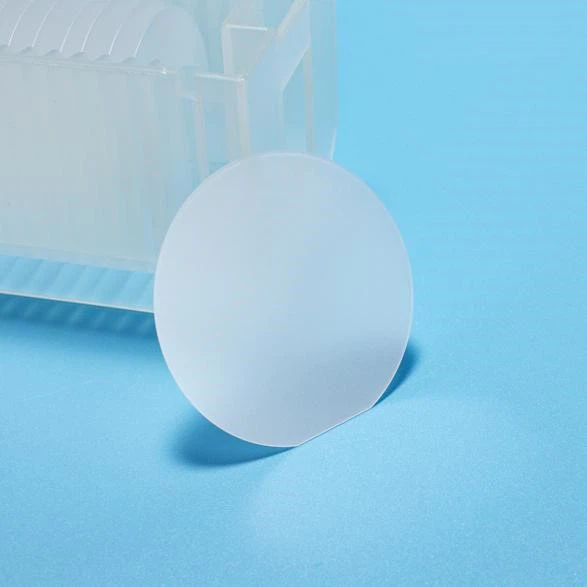
Hey there! As a supplier of Sapphire Wafers, I often get asked if these little wonders can be used in aerospace applications. Well, let's dive right in and explore this topic.
First off, what are Sapphire Wafers? Sapphire wafers are thin slices of single - crystal sapphire. Sapphire, for those who don't know, is a form of aluminum oxide (Al₂O₃) with some really amazing properties. It's super hard, ranking 9 on the Mohs scale of hardness, just behind diamonds. It also has excellent thermal conductivity, good chemical resistance, and high optical transparency in a wide range of wavelengths.
Now, let's talk about aerospace. The aerospace industry is a tough one. It demands materials that can withstand extreme conditions. We're talking about high temperatures, intense radiation, and rapid pressure changes. So, can Sapphire Wafers cut it?
High - Temperature Resistance
One of the key challenges in aerospace is dealing with high temperatures. For example, during re - entry into the Earth's atmosphere, spacecraft experience a huge amount of heat. Sapphire wafers have a high melting point of around 2040°C. This means they can maintain their structural integrity even in extremely hot environments. In engines, where temperatures can soar, sapphire wafers can be used in sensors. These sensors need to work accurately under high - heat conditions, and the high - temperature resistance of sapphire wafers makes them a great choice.
Radiation Resistance
Space is full of radiation, including cosmic rays and solar flares. This radiation can damage electronic components, leading to malfunctions in spacecraft systems. Sapphire has good radiation resistance. When used in electronic devices on board spacecraft, sapphire wafers can protect the sensitive circuits from radiation damage. This helps to ensure the long - term reliability of the equipment, which is crucial for space missions that can last for years.
Optical Properties
Sapphire wafers have excellent optical properties. They are transparent in the ultraviolet, visible, and infrared regions. In aerospace, this is really useful for optical systems. For example, in telescopes on satellites, sapphire wafers can be used as windows or lenses. Their high optical quality allows for clear imaging, which is essential for tasks like Earth observation or astronomical research. You can check out more about our Sapphire Light Guide Rod and Sapphire Light Guide Block which also utilize these optical properties.
Mechanical Strength
The aerospace environment is full of mechanical stresses. Vibration during launch, for instance, can put a lot of strain on components. Sapphire wafers are very strong and can withstand these mechanical forces. They have a high Young's modulus, which means they are stiff and don't deform easily. This makes them suitable for use in structural components or in devices that need to maintain their shape under stress.
Chemical Resistance
In space, there are various chemicals and gases that can react with materials. Sapphire wafers have good chemical resistance, which means they won't corrode or degrade easily when exposed to these substances. This is important for the long - term durability of components in space.

Applications in Aerospace
Let's look at some specific applications. In avionics, sapphire wafers can be used in microelectromechanical systems (MEMS). These are tiny devices that combine mechanical and electrical components. Sapphire's properties make it an ideal substrate for MEMS, as it can provide a stable platform for the delicate electronic parts.
In thermal management systems, sapphire wafers can be used as heat spreaders. They can efficiently transfer heat away from hot components, helping to keep the temperature of the equipment within acceptable limits.
For communication systems on spacecraft, sapphire wafers can be used in optical communication devices. Their optical transparency and stability make them suitable for transmitting and receiving light signals, which are used for high - speed data transfer in space.
Challenges and Considerations
Of course, using sapphire wafers in aerospace isn't without its challenges. One of the main issues is cost. Sapphire is more expensive than some other materials. However, when you consider the long - term benefits in terms of reliability and performance, the cost can be justified.
Another challenge is the manufacturing process. Producing high - quality sapphire wafers requires specialized equipment and expertise. But as a supplier, we've got that covered. We have state - of - the - art manufacturing facilities and a team of experts who can ensure that our Sapphire Wafers meet the strict requirements of the aerospace industry.
Conclusion
So, can sapphire wafers be used in aerospace applications? The answer is a resounding yes! Their unique combination of high - temperature resistance, radiation resistance, optical properties, mechanical strength, and chemical resistance makes them well - suited for a wide range of aerospace uses.
If you're in the aerospace industry and are looking for high - quality sapphire wafers, we'd love to talk to you. Whether you're working on a new satellite project, an aircraft engine upgrade, or any other aerospace application, our sapphire wafers can provide the performance and reliability you need. Reach out to us to start a conversation about your specific requirements and how we can help you with your procurement needs.
References
- "Properties of Sapphire" - Journal of Materials Science
- "Aerospace Materials: Requirements and Challenges" - Aerospace Engineering Review
- "Optical Applications of Sapphire in Space" - Space Optics Journal


