

Can Sapphire Wafers be used in quantum computing?
Leave a message

As a supplier of Sapphire Wafers, I am often asked about the potential applications of our products. One of the most exciting and cutting - edge fields where sapphire wafers might have a role is quantum computing. In this blog, I'll explore whether sapphire wafers can indeed be used in quantum computing, delving into the properties of sapphire wafers, the requirements of quantum computing, and the current state of research in this area.
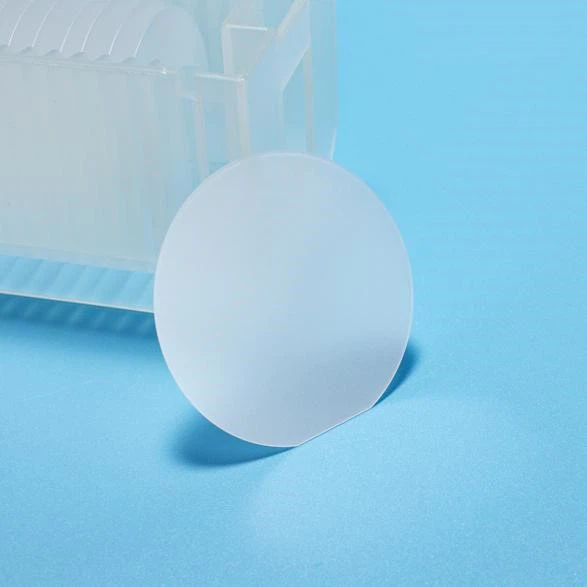

Properties of Sapphire Wafers
Sapphire wafers are made from single - crystal sapphire, which is a form of aluminum oxide (Al₂O₃). Sapphire has several remarkable properties that make it an attractive material for various high - tech applications.
Firstly, sapphire has excellent mechanical properties. It is extremely hard, ranking 9 on the Mohs scale of mineral hardness, second only to diamond. This hardness means that sapphire wafers can withstand physical stress and abrasion, making them suitable for use in environments where mechanical durability is crucial.
Secondly, sapphire has high thermal conductivity. It can efficiently dissipate heat, which is essential in applications where heat generation is a concern. In electronic devices, for example, effective heat dissipation can prevent overheating and improve the overall performance and reliability of the device.
Optically, sapphire is highly transparent in a wide range of wavelengths, from the ultraviolet to the mid - infrared. This optical transparency makes it useful for applications such as Sapphire Light Guide Rod and Sapphire Light Guide Block, where the transmission of light is required.
In addition, sapphire has good chemical stability. It is resistant to many chemicals, which allows it to be used in harsh chemical environments without significant degradation.
Requirements of Quantum Computing
Quantum computing is a revolutionary technology that leverages the principles of quantum mechanics to perform complex computations at speeds far beyond what is possible with classical computers. To build a quantum computer, several key requirements need to be met.
One of the most important requirements is the need for qubits, the basic units of quantum information. Qubits can exist in a superposition of states, allowing them to represent multiple values simultaneously. However, qubits are extremely fragile and easily disrupted by external factors such as heat, electromagnetic fields, and noise. Therefore, a stable and well - controlled environment is necessary to maintain the coherence of qubits.
Another requirement is the ability to manipulate and measure qubits accurately. This requires precise control of the quantum states of qubits, which often involves the use of lasers, microwave pulses, and other sophisticated techniques.
Furthermore, the materials used in quantum computing need to have low noise and minimal interference with the quantum states. Any unwanted interactions between the materials and the qubits can lead to decoherence, which destroys the quantum information and makes the computation unreliable.
Can Sapphire Wafers Meet the Requirements?
Let's analyze whether sapphire wafers can meet the requirements of quantum computing based on their properties.
1. Thermal Stability
The high thermal conductivity of sapphire wafers is a significant advantage in quantum computing. Since qubits are very sensitive to temperature changes, effective heat dissipation is crucial to maintain a stable environment. Sapphire wafers can help to keep the temperature of the quantum computing system relatively constant, reducing the risk of decoherence caused by thermal fluctuations.
2. Mechanical Stability
The hardness and mechanical durability of sapphire wafers make them suitable for use in the construction of quantum computing devices. They can provide a stable physical platform for the placement of qubits and other components, protecting them from mechanical vibrations and shocks that could disrupt the quantum states.
3. Optical Properties
The optical transparency of sapphire wafers is also beneficial in quantum computing. In some quantum computing architectures, lasers are used to manipulate and measure qubits. Sapphire's ability to transmit light in a wide range of wavelengths allows for the efficient use of lasers in these processes. For example, Sapphire Light Guide Rod and Sapphire Light Guide Block made from sapphire wafers can be used to guide the laser beams precisely to the qubits, enabling accurate control and measurement.
4. Chemical Stability
The chemical stability of sapphire wafers means that they can resist the effects of chemical contaminants in the environment. This is important because any chemical reactions or interactions with the qubits can cause decoherence. Sapphire's resistance to chemicals helps to maintain a clean and stable environment for the quantum computing system.
However, there are also some challenges in using sapphire wafers in quantum computing. One of the main challenges is the potential for surface defects and impurities in the sapphire wafers. These defects and impurities can introduce noise and interfere with the quantum states of qubits. Therefore, high - quality sapphire wafers with minimal defects are required for quantum computing applications.
Current State of Research
Although the use of sapphire wafers in quantum computing is still in the early stages of research, there have been some promising developments.
Some research groups are exploring the use of sapphire wafers as substrates for hosting qubits. By depositing qubit materials on sapphire wafers, they hope to take advantage of sapphire's excellent properties to improve the performance and stability of qubits.
In addition, researchers are investigating the optical properties of sapphire wafers for use in quantum communication and quantum sensing, which are closely related to quantum computing. The ability of sapphire to transmit light efficiently can be used to create optical interfaces between different components of a quantum computing system, enabling seamless communication and information transfer.
Conclusion
In conclusion, sapphire wafers have several properties that make them a potential candidate for use in quantum computing. Their thermal stability, mechanical durability, optical transparency, and chemical stability can help to meet some of the key requirements of quantum computing, such as maintaining the coherence of qubits, providing a stable physical platform, and enabling precise control and measurement.
However, there are still challenges to overcome, such as reducing surface defects and impurities in the sapphire wafers. With continued research and development, it is possible that sapphire wafers will play an important role in the future of quantum computing.
If you are interested in exploring the potential of Sapphire Wafer for your quantum computing projects or other high - tech applications, I encourage you to contact us for further discussion and potential procurement. We are committed to providing high - quality sapphire wafers and excellent customer service.
References
- "Quantum Computing: A Gentle Introduction" by Eleanor Rieffel and Wolfgang Polak
- Research papers on the properties of sapphire and its applications in high - tech fields from academic journals such as "Applied Physics Letters" and "Journal of Crystal Growth"


