

How do Sapphire Wafers perform in space environments?
Leave a message

Hey there! As a supplier of Sapphire Wafers, I've been getting a lot of questions lately about how these little wonders perform in space environments. So, I thought I'd sit down and share what I know.
First off, let's talk about what sapphire wafers are. Sapphire, in case you're not familiar, is a form of aluminum oxide. It's super hard - second only to diamond on the Mohs scale of hardness. Sapphire wafers are thin, flat pieces of this material, and they've got some pretty amazing properties that make them stand out.
One of the key things about space environments is the extreme conditions. We're talking about high levels of radiation, huge temperature swings, and a whole lot of vacuum. So, how do sapphire wafers hold up in all this?
Let's start with radiation. In space, there's a constant stream of high - energy particles like protons and heavy ions. These can cause all sorts of problems for materials, including degradation and changes in electrical properties. But sapphire wafers are pretty tough cookies. They have a high radiation resistance. The strong atomic bonds in sapphire make it less likely to be damaged by these high - energy particles. This means that electronic components made with sapphire wafers can keep working properly even when exposed to radiation. For example, if you're using a sapphire wafer in a satellite's control system, it's less likely to malfunction due to radiation exposure.
Now, let's move on to temperature. Space is a place of extremes. On the side facing the sun, temperatures can soar, while on the dark side, they can plunge to incredibly low levels. Sapphire wafers have a high thermal conductivity and a low coefficient of thermal expansion. What does that mean? Well, high thermal conductivity means that they can transfer heat quickly. So, if a part of the wafer gets hot, the heat can spread out evenly, preventing hot spots that could damage the material. And the low coefficient of thermal expansion means that the wafer doesn't expand or contract too much when the temperature changes. This is crucial because if a material expands or contracts too much, it can crack or break. So, sapphire wafers can handle those wild temperature swings in space without falling apart.
Another important aspect of space is the vacuum. In a vacuum, there's no air or other gases to help dissipate heat or protect the material from surface reactions. Sapphire wafers are chemically stable in a vacuum. They don't react easily with other substances, which means they won't corrode or degrade over time. This stability is really important for long - term space missions. For instance, if you're sending a probe on a multi - year journey through space, you want the components made with sapphire wafers to stay in good condition throughout the trip.
Sapphire wafers also have excellent optical properties. In space, there are all sorts of optical systems, like telescopes and cameras. Sapphire has a high transparency in a wide range of wavelengths, from the ultraviolet to the infrared. This makes it ideal for use in optical components. You can use Sapphire Wafers to make lenses, windows, or other parts that need to transmit light accurately. And because of their hardness, these optical components are less likely to get scratched or damaged during the rigors of space travel.

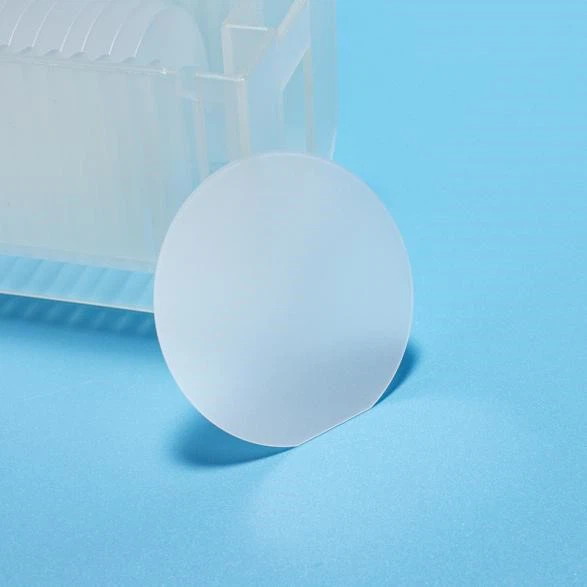
In addition to sapphire wafers, we also offer other sapphire - based products. For example, our Sapphire Light Guide Rod is great for guiding light in optical systems. It has the same great properties as sapphire wafers, like high radiation resistance and good optical transparency. And our Sapphire Light Guide Block can be used to direct light in a more complex way, which is useful for some advanced space - based optical applications.
So, if you're involved in the space industry, whether it's building satellites, probes, or other space equipment, sapphire wafers could be a great choice for your projects. They offer a combination of durability, stability, and excellent performance in the harsh conditions of space.
If you're interested in learning more about our sapphire wafers or any of our other sapphire products, I'd love to have a chat with you. Whether you've got questions about the technical details, pricing, or placing an order, just reach out. We're here to help you find the right solutions for your space - related needs.
Let's work together to make your space projects a success!
References
- "Materials for Space Applications" - A comprehensive book on materials used in space environments.
- Research papers on the properties of sapphire in extreme conditions.


