

Is a quartz beaker suitable for use in a cryogenic environment?
Leave a message

Hey there! As a supplier of quartz beakers, I often get asked whether these nifty pieces of lab equipment are suitable for use in cryogenic environments. It's a great question, and one that I'm more than happy to dive into. So, let's break it down and see if quartz beakers are the right choice for those super-cold situations.

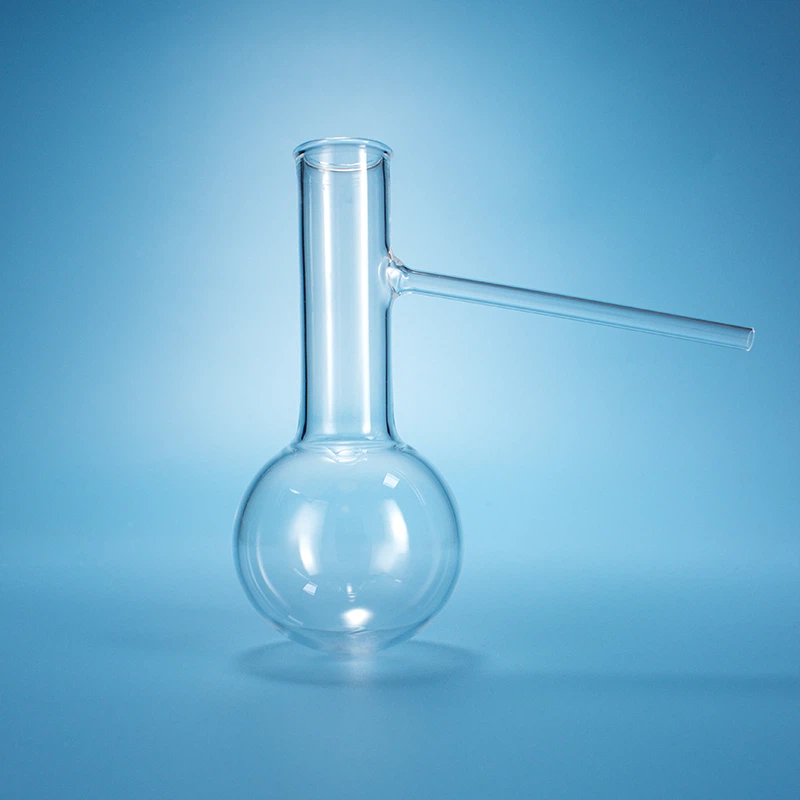
First off, let's talk about what quartz beakers are. Quartz is a type of glass that's made from silicon dioxide. It's known for its high purity, excellent thermal stability, and resistance to chemical corrosion. These properties make quartz beakers a popular choice in many laboratories for a wide range of applications, from simple mixing and heating to more complex chemical reactions.
Now, when it comes to cryogenic environments, we're talking about temperatures that are extremely low, usually below -150°C. These conditions can be found in various scientific and industrial settings, such as in cryogenic research, superconducting experiments, and even in some medical applications. So, the big question is: can quartz beakers handle these frigid temperatures?
The good news is that quartz has some pretty impressive thermal properties. It has a very low coefficient of thermal expansion, which means that it doesn't expand or contract much when the temperature changes. This is a crucial factor in cryogenic applications because rapid temperature changes can cause materials to crack or shatter due to thermal stress. With quartz, the risk of this happening is significantly reduced, making it a relatively stable option in cold environments.
Another advantage of quartz is its high purity. Impurities in glass can act as weak points, making it more susceptible to damage under extreme conditions. Since quartz is highly pure, it's less likely to have these weak spots, which further enhances its durability in cryogenic settings.
However, it's not all sunshine and rainbows. While quartz is generally more resistant to thermal shock than other types of glass, it's not completely immune. Sudden and extreme temperature changes can still pose a risk. For example, if you take a quartz beaker that's at room temperature and plunge it directly into a cryogenic liquid, the rapid cooling could potentially cause it to crack. To avoid this, it's important to gradually cool the beaker down to the cryogenic temperature. This can be done by using a step-wise cooling process or by pre-cooling the beaker in an intermediate temperature bath.
In addition to thermal shock, there's also the issue of mechanical stress. Cryogenic environments can be quite harsh, and the beakers may be subject to physical impacts or vibrations. Quartz, while strong, is still a brittle material. So, if it's dropped or bumped too hard, it could break. It's important to handle quartz beakers with care in any environment, but especially in cryogenic ones where the risk of damage may be slightly higher.
Now, let's compare quartz beakers with some other types of lab glassware commonly used in cryogenic applications. For example, Kjeldahl Flasks are often used in chemical analysis, but they may not be as well-suited for cryogenic work as quartz beakers. Kjeldahl flasks are typically made of borosilicate glass, which has a higher coefficient of thermal expansion than quartz. This means that they're more likely to experience thermal stress and cracking in extreme cold.
On the other hand, Quartz Distilling Flask shares many of the same advantages as quartz beakers in cryogenic environments. Like quartz beakers, they're made of high-purity quartz, which gives them good thermal stability and resistance to chemical corrosion. However, their shape and design are specifically optimized for distillation processes, so they may not be as versatile as beakers for general mixing and measuring tasks.
If you're looking for something more precise for measuring volumes in a cryogenic environment, Graduated Measuring Cylinder could be an option. These cylinders are available in both quartz and other types of glass. Quartz measuring cylinders offer the same benefits as quartz beakers in terms of thermal stability, but they provide more accurate volume measurements, which can be crucial in many cryogenic experiments.
So, to sum it up, quartz beakers can be a suitable choice for use in cryogenic environments, but they do come with some caveats. Their low coefficient of thermal expansion and high purity make them relatively stable and durable in cold temperatures, but they still need to be handled with care to avoid thermal shock and mechanical damage.
If you're in the market for high-quality quartz beakers or other lab glassware for cryogenic applications, I'd love to help. Whether you have questions about product specifications, pricing, or need advice on the best glassware for your specific needs, don't hesitate to reach out. We're here to make sure you get the right equipment for your laboratory.
References
- Handbook of Laboratory Glassware and Equipment
- Journal of Cryogenic Engineering Research


