

What are the microfluidic - related properties of a quartz test tube?
Leave a message

Hey there! I'm a supplier of Quartz Test Tubes. And I'm super excited to talk about the microfluidic - related properties of these amazing little tubes.
Let's start with what microfluidics is all about. Microfluidics is the study and manipulation of fluids at the microscopic level. It's all about dealing with really small volumes of fluids, often in channels that are just a few micrometers wide. This technology has a ton of applications, from medical diagnostics to chemical analysis and even in biological research.
So, how do Quartz Test Tubes fit into the world of microfluidics? Well, quartz has some unique properties that make it a top - choice material in this field.
Chemical Inertness
One of the most important microfluidic - related properties of quartz test tubes is their chemical inertness. In microfluidic applications, you're often working with a wide variety of chemicals. Some of these can be extremely reactive. Quartz is resistant to most acids, bases, and organic solvents. This means that when you're using a quartz test tube for microfluidic experiments, you don't have to worry about the tube reacting with the fluids inside it.
For example, in a chemical analysis experiment where you're trying to measure the concentration of a particular compound in a sample, if the test tube reacts with the sample, it can mess up your results. But with a quartz test tube, you can be confident that the tube won't interfere with the chemical reactions taking place inside. This chemical stability is crucial for accurate and reliable microfluidic experiments.
Optical Transparency
Quartz is also highly optically transparent. In microfluidics, being able to see what's going on inside the fluid channels is really important. You might want to observe the flow of cells in a biological sample, or the formation of chemical compounds during a reaction.
Quartz test tubes allow for excellent visualization because they have a high transmittance of light across a wide range of wavelengths, from ultraviolet (UV) to infrared (IR). This means that you can use different types of optical techniques, like UV - Vis spectroscopy or fluorescence microscopy, to study the fluids inside the test tube without any interference from the tube material itself.
For instance, in a fluorescence - based biological assay, the quartz test tube won't absorb or scatter the fluorescent light emitted by the sample, allowing you to get clear and accurate readings.
Thermal Stability
Microfluidic experiments often involve temperature changes. You might need to heat a sample to speed up a chemical reaction, or cool it down to preserve biological materials. Quartz has excellent thermal stability.
It can withstand high temperatures without deforming or cracking. This is really useful in microfluidics because it allows you to perform experiments at a wide range of temperatures. In contrast, other materials like plastic test tubes might melt or warp at high temperatures, which can ruin your experiment.
For example, in a polymerase chain reaction (PCR) experiment, which requires cycling between different temperatures to amplify DNA, a quartz test tube can handle the thermal stress without any issues, ensuring the success of the experiment.
Low Surface Roughness
The surface of a quartz test tube is very smooth, with low surface roughness. In microfluidics, the surface properties of the channels can have a big impact on fluid flow. A rough surface can cause the fluid to stick or create turbulence, which can affect the accuracy of your experiment.
The smooth surface of quartz test tubes allows for laminar flow of fluids. Laminar flow is a predictable and orderly flow pattern where the fluid moves in parallel layers. This is ideal for microfluidic applications because it allows for better control of the fluid movement and more accurate mixing and separation of different components in the fluid.
Our Product Range
Apart from Quartz Test Tubes, we also offer other high - quality quartz laboratory glassware. Check out our Quartz Petri Culture Dishes. These dishes are perfect for culturing cells or growing microorganisms. Their quartz construction ensures the same chemical inertness, optical transparency, and thermal stability as our test tubes.
We also have Quartz Ground Glass Joint Bottle. These bottles are great for storing and transporting chemicals safely. The ground glass joint provides a tight seal, preventing any leaks, and the quartz material keeps the chemicals in good condition.
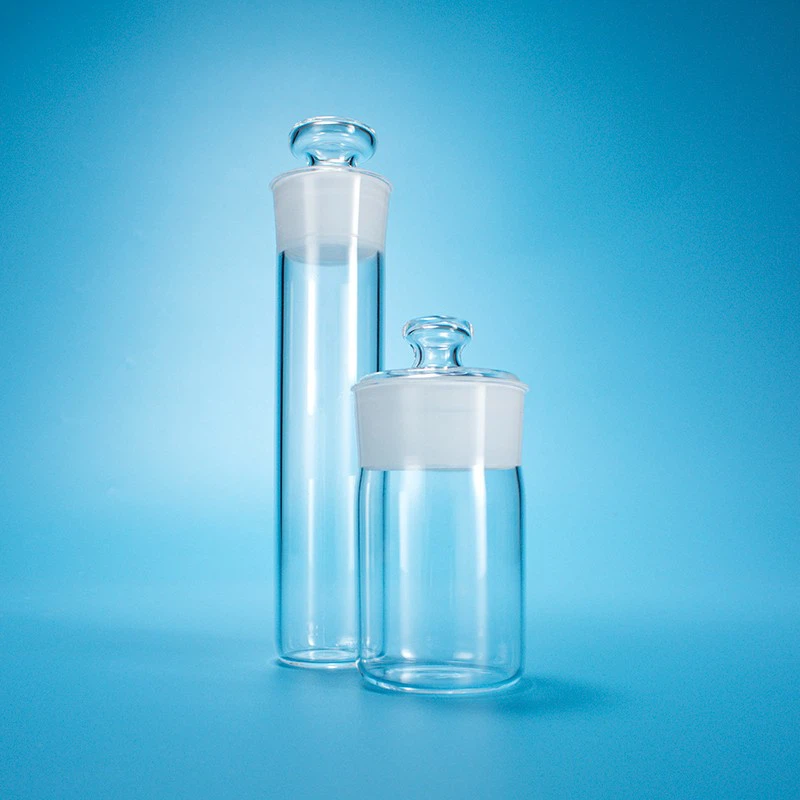

And if you're looking for something with a different shape, our Quartz Square Cylinder is a great option. It offers the same excellent properties as our other products and has a unique square shape that can be useful for certain types of experiments.
Why Choose Us
If you're in the market for Quartz Test Tubes or any of our other quartz laboratory glassware, there are several reasons to choose us. First of all, we're committed to quality. We use the highest - grade quartz materials and the latest manufacturing techniques to ensure that our products meet the highest standards.
Secondly, we offer a wide range of products. Whether you need small test tubes for single - use experiments or large - scale bottles for storing bulk chemicals, we've got you covered.
Finally, our customer service is top - notch. We understand that every customer has unique needs, and we're here to help you find the right products for your specific applications. Whether you have questions about the products or need advice on how to use them, our team of experts is always ready to assist you.
Let's Do Business
If you're interested in our Quartz Test Tubes or any of our other quartz laboratory glassware, we'd love to hear from you. Whether you're a researcher in a university, a scientist in a pharmaceutical company, or someone in a small - scale research lab, we can provide you with the high - quality products you need.
Just reach out to discuss your requirements, and we can work together to find the best solutions for your microfluidic and other laboratory needs. We're looking forward to starting a great business relationship with you!
References
- "Microfluidics: Basics, Applications, and Manipulation" by Nam - Trung Nguyen and Steve T. Wereley.
- "Quartz and Its Applications in Laboratory Science" by various authors in the Journal of Laboratory Glassware Research.


