

Is a quartz beaker suitable for use in a radioactive environment?
Leave a message

Is a quartz beaker suitable for use in a radioactive environment?
As a supplier of quartz beakers, I often encounter inquiries from researchers and scientists about the suitability of our products in various experimental settings, especially in radioactive environments. This blog post aims to delve into the properties of quartz beakers and assess their viability for use in such challenging conditions.
Properties of Quartz Beakers
Quartz is a crystalline form of silicon dioxide (SiO₂) known for its exceptional physical and chemical properties. These properties make quartz beakers popular in laboratory applications, including those involving high temperatures, corrosive chemicals, and precise measurements.
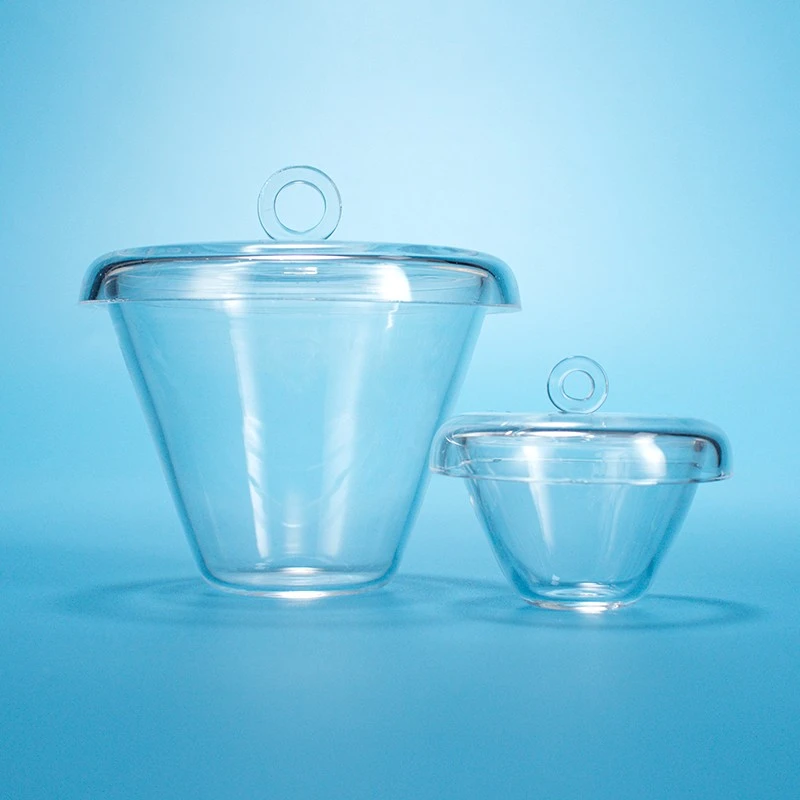

One of the key advantages of quartz beakers is their high thermal resistance. Quartz can withstand extremely high temperatures without melting or deforming significantly. This property is crucial in many laboratory processes, such as heating samples to high temperatures for chemical reactions or analysis. Additionally, quartz has low thermal expansion, meaning it does not expand or contract much when exposed to temperature changes. This stability ensures accurate measurements and prevents cracking or breakage due to thermal stress.
Quartz is also highly resistant to chemical corrosion. It is inert to most acids, bases, and organic solvents, making it suitable for use with a wide range of chemicals. This resistance is particularly important in radioactive environments, where samples may be contaminated with radioactive isotopes and require careful handling to prevent cross - contamination.
Another important property of quartz is its transparency. Quartz beakers allow for easy visual observation of the contents, which is essential for monitoring chemical reactions and ensuring the accuracy of experimental procedures.
Radioactive Environments and Their Challenges
Radioactive environments pose unique challenges for laboratory equipment. Radioactive materials emit ionizing radiation, such as alpha particles, beta particles, and gamma rays. These types of radiation can cause damage to materials over time, leading to changes in their physical and chemical properties.
For example, ionizing radiation can cause the formation of color centers in materials, which can affect their transparency and optical properties. In addition, radiation can induce chemical reactions within the material, leading to the degradation of its structure and a loss of its mechanical and chemical stability.
The interaction of radiation with materials can also produce free radicals, which can react with other molecules in the environment and cause further damage. This can be a particular concern in laboratory settings, where the integrity of the equipment is crucial for accurate experimental results.
Suitability of Quartz Beakers in Radioactive Environments
When considering the suitability of quartz beakers in radioactive environments, we need to evaluate how the properties of quartz respond to ionizing radiation.
1. Radiation Resistance
Quartz has relatively good radiation resistance compared to many other materials. The high - purity crystalline structure of quartz makes it less susceptible to radiation - induced damage. However, long - term exposure to high - intensity radiation can still cause some changes in quartz. For example, the formation of color centers can occur, which may affect the transparency of the beaker over time. But these changes are often relatively minor and may not significantly impact the functionality of the beaker for most applications.
2. Chemical Stability
As mentioned earlier, quartz is highly chemically stable. In radioactive environments, where samples may be contaminated with radioactive isotopes and various chemicals, the chemical stability of quartz ensures that the beaker will not react with the contents. This is important for preventing the release of contaminants and maintaining the integrity of the experimental setup.
3. Thermal Stability
The high thermal stability of quartz is also an advantage in radioactive environments. Some radioactive experiments may involve heating samples, and the ability of quartz to withstand high temperatures without deforming or melting is crucial. This ensures that the beaker can be used safely in a wide range of temperature - controlled processes.
However, it is important to note that the suitability of quartz beakers in radioactive environments also depends on the specific type and intensity of the radiation, as well as the duration of exposure. For very high - intensity radiation fields or long - term exposure scenarios, additional precautions may be necessary.
Comparison with Other Laboratory Glassware
To better understand the suitability of quartz beakers in radioactive environments, it is useful to compare them with other types of laboratory glassware.
Quartz Crucible: Quartz crucibles are similar to quartz beakers in terms of their material properties. They also have high thermal and chemical resistance. However, crucibles are typically designed for high - temperature applications and may have a different shape and capacity compared to beakers. In radioactive environments, crucibles may be more suitable for melting or fusing radioactive samples, while beakers are better for mixing and measuring solutions.
Flask with Three Necks: Three - necked flasks are commonly used for chemical reactions that require multiple inlets and outlets. While they may be made of glass, including quartz, their design and functionality are different from beakers. In radioactive environments, the complex shape of three - necked flasks may make them more difficult to clean and decontaminate compared to beakers.
Quartz Test Tube: Quartz test tubes are smaller in size compared to beakers and are often used for small - scale experiments. They share the same advantages of quartz, such as high thermal and chemical resistance. However, their limited capacity may not be suitable for larger - scale radioactive experiments.
Precautions and Best Practices
If you plan to use quartz beakers in radioactive environments, it is important to follow some precautions and best practices:
- Shielding: Provide appropriate shielding for the beakers to reduce the exposure to radiation. This can help extend the lifespan of the beakers and minimize the risk of radiation - induced damage.
- Regular Inspection: Regularly inspect the beakers for signs of damage, such as cracks, discoloration, or changes in transparency. Replace any damaged beakers immediately to prevent the release of radioactive contaminants.
- Proper Cleaning and Decontamination: Develop a strict cleaning and decontamination protocol for the beakers. Use appropriate cleaning agents and techniques to ensure that the beakers are free from radioactive residues after each use.
Conclusion
In conclusion, quartz beakers can be a suitable choice for use in radioactive environments. Their high thermal resistance, chemical stability, and transparency make them well - suited for many laboratory processes involving radioactive materials. However, it is important to be aware of the potential effects of ionizing radiation on quartz and to take appropriate precautions to ensure the long - term performance and safety of the beakers.
If you are interested in purchasing quartz beakers for your radioactive research or other laboratory applications, we invite you to contact us for more information and to discuss your specific requirements. Our team of experts is ready to assist you in finding the right products for your needs.
References
- "Handbook of Laboratory Glassware and Equipment", Elsevier, 2018.
- "Radiation Effects on Materials", Springer, 2020.
- "Quartz and Its Applications in the Laboratory", Journal of Laboratory Science, Vol. 56, 2019.


