

Is a quartz rod a good electrical insulator?
Leave a message

Is a quartz rod a good electrical insulator? Well, as a quartz rod supplier, I've been asked this question quite a few times. So, let's dive right in and explore the ins and outs of quartz rods as electrical insulators.
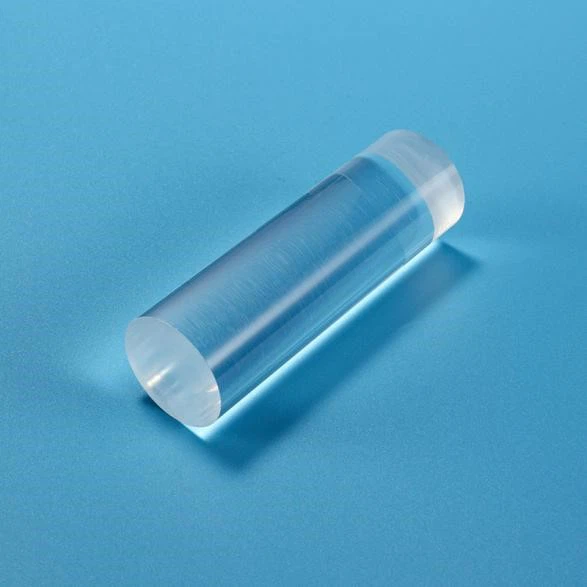

First off, let's talk a bit about what quartz is. Quartz is a mineral made up of silicon and oxygen atoms, and it's one of the most abundant minerals on Earth. It comes in different forms, like Quartz Sand and Quartz Ingot, and of course, the Quartz Rod that we supply.
Now, to answer the big question: yes, a quartz rod is an excellent electrical insulator. There are several reasons for this. One of the main factors is its chemical structure. The silicon - oxygen bonds in quartz are very strong and stable. These bonds hold the atoms tightly together, making it difficult for electrons to move freely. In electrical terms, for a material to conduct electricity, electrons need to be able to flow easily. Since the electrons in quartz are tightly bound, it doesn't allow a significant flow of electric current, which is the key characteristic of an insulator.
Another aspect is its high resistivity. Resistivity is a measure of how strongly a material opposes the flow of electric current. Quartz has a very high resistivity value. This means that when an electric potential is applied across a quartz rod, only a tiny amount of current will pass through it. In fact, compared to metals like copper or aluminum, which are great conductors, the resistivity of quartz is many orders of magnitude higher.
Quartz also has good dielectric properties. A dielectric is an insulating material that can be polarized by an applied electric field. When an electric field is applied to a quartz rod, the positive and negative charges within the quartz molecules shift slightly, creating an internal electric field that opposes the applied field. This property allows quartz to store electrical energy in an electric field without conducting a large amount of current.
One of the great things about using quartz rods as electrical insulators is their stability over a wide range of temperatures. Many materials lose their insulating properties as the temperature changes. But quartz can maintain its high resistivity and dielectric strength even at elevated temperatures. This makes it suitable for use in high - temperature electrical applications, such as in some industrial furnaces or high - power electrical equipment.
In addition to its electrical properties, quartz rods are also very durable. They are resistant to corrosion and chemical attack. This means that they can be used in harsh environments where other insulating materials might degrade over time. For example, in some chemical processing plants, where there are corrosive chemicals present, quartz rods can still function effectively as electrical insulators.
Let's look at some real - world applications where quartz rods are used as electrical insulators. In the semiconductor industry, quartz rods are used in the manufacturing process. Semiconductor equipment often requires precise control of electrical currents and voltages. Quartz rods are used to isolate different electrical components and prevent unwanted electrical interference. They help maintain the integrity of the electrical circuits in these high - tech devices.
In the field of high - voltage power transmission, quartz insulators are sometimes used on power lines. These insulators need to be able to withstand high voltages without breaking down and conducting electricity. The high resistivity and excellent dielectric properties of quartz make it a good choice for this application.
However, it's not all perfect. While quartz rods are great insulators, they do have some limitations. One of the main limitations is their cost. Compared to some other common insulating materials, such as plastics or ceramics, quartz is relatively expensive. This can make it less attractive for some low - cost applications where the performance requirements are not extremely high.
Another limitation is that quartz is brittle. It can break if it's subjected to mechanical shock or stress. So, in applications where there is a risk of physical impact, special care needs to be taken to protect the quartz rods.
If you're in the market for high - quality electrical insulators and are considering quartz rods, we're here to help. As a quartz rod supplier, we offer a wide range of quartz rods with different specifications. Whether you need a small - diameter rod for a delicate electronic device or a large - diameter rod for an industrial application, we can provide you with the right product.
Our quartz rods are made from high - purity quartz materials, which ensures excellent electrical and physical properties. We have strict quality control measures in place to make sure that each rod meets the highest standards. If you have any questions about our products, or if you want to discuss your specific requirements for an electrical insulation project, don't hesitate to get in touch. We're always happy to have a chat and see how we can help you find the best solution for your needs.
In conclusion, a quartz rod is indeed a good electrical insulator. Its strong chemical bonds, high resistivity, good dielectric properties, and stability over a wide range of temperatures make it a valuable choice for many electrical applications. Although it has some limitations, its advantages often outweigh the drawbacks, especially in high - performance and high - temperature applications. So, if you're looking for a reliable electrical insulator, consider giving quartz rods a try.
References
- "Handbook of Electrical Insulating Materials"
- "Properties of Quartz and Its Applications in Electrical Engineering"


