

What are the applications of quartz tubes in laboratory settings?
Leave a message

Hey there, fellow lab enthusiasts! Today, I'm super stoked to chat about the amazing applications of quartz tubes in laboratory settings. As a supplier of top - notch quartz tubes, I've seen firsthand how these versatile pieces of equipment can make a huge difference in various scientific experiments and processes.
1. Spectroscopy
One of the most common uses of quartz tubes in labs is in spectroscopy. Spectroscopy is all about analyzing the interaction between matter and electromagnetic radiation. Quartz tubes are a go - to choice here because they have excellent optical properties. They can transmit light across a wide range of wavelengths, from the ultraviolet (UV) to the infrared (IR).
In UV - Vis spectroscopy, for example, we're often looking at how molecules absorb light in the ultraviolet and visible regions. Quartz tubes are transparent to UV light, which is crucial since many chemical compounds absorb UV radiation in characteristic ways. This allows us to identify and quantify different substances in a sample. If you're using glass tubes instead, they would absorb a significant amount of UV light, messing up your measurements.
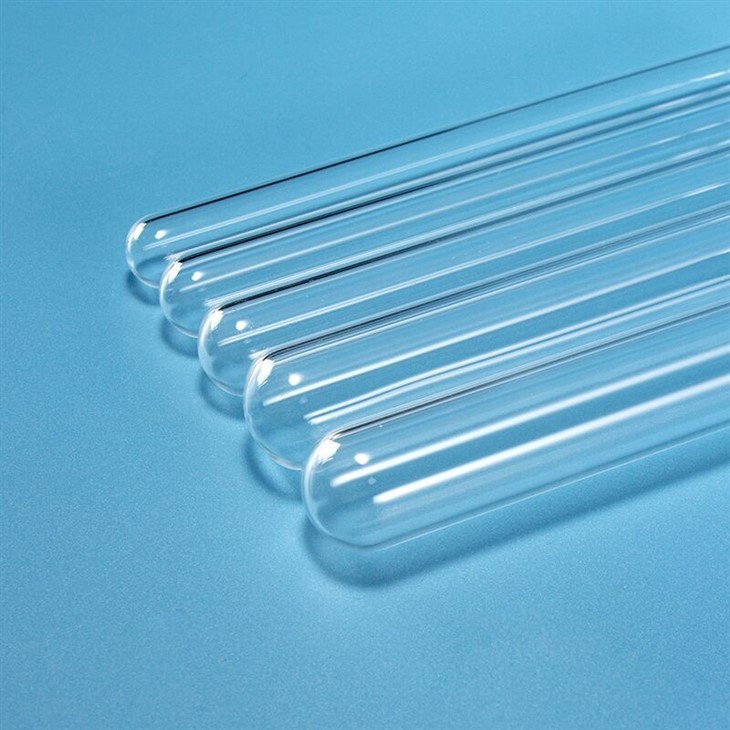
In fluorescence spectroscopy, quartz tubes also shine. Fluorescent molecules emit light when excited by a specific wavelength of light. The quartz tube's ability to transmit both the excitation light and the emitted fluorescent light without significant loss makes it ideal for this type of analysis. You can check out our Quartz Tubes that are specifically designed for spectroscopy applications. They're made with high - quality quartz to ensure maximum light transmission and accurate results.

2. Chemical Reactions
Quartz tubes are also widely used in chemical reactions, especially those that involve high temperatures or corrosive substances. Quartz has a high melting point, typically around 1700°C, which means it can withstand the heat generated in many chemical processes.
For instance, in pyrolysis reactions, where organic materials are heated in the absence of oxygen to break them down into smaller molecules, quartz tubes are a great choice. The high - temperature stability of quartz ensures that the tube doesn't melt or deform during the reaction.
Moreover, quartz is highly resistant to most chemicals, including acids and bases. This makes it suitable for reactions involving corrosive substances. You don't have to worry about the tube reacting with the chemicals in your experiment and contaminating your results. Our Quartz Protective Tube provides an extra layer of protection during these chemical reactions, ensuring the safety of your experiment and the accuracy of your data.
3. Gas Analysis
In gas analysis, quartz tubes play a vital role. They can be used as sample cells to hold gas samples for analysis. The transparency of quartz allows for easy observation and measurement of the gas inside.
For example, in gas chromatography, a technique used to separate and analyze different components in a gas mixture, quartz tubes can be used as columns. The inner surface of the quartz tube can be coated with a stationary phase, and as the gas mixture passes through the tube, the different components interact with the stationary phase to varying degrees, causing them to separate.
Quartz tubes are also used in gas sensors. They can provide a stable environment for the sensing elements and allow the gas to interact with the sensor effectively. Our Quartz Ultraviolet Sterilization Tubes can be used in some gas analysis setups to sterilize the gas sample or the surrounding environment, preventing contamination and ensuring accurate measurements.
4. UV Sterilization
UV sterilization is another important application of quartz tubes in the lab. Quartz is an excellent material for UV - emitting tubes because it can efficiently transmit UV light. UV light has germicidal properties, which means it can kill or inactivate microorganisms such as bacteria, viruses, and fungi.
In a laboratory setting, maintaining a sterile environment is crucial to prevent contamination of samples and experiments. Quartz UV sterilization tubes can be used to sterilize work surfaces, equipment, and even the air in a laboratory. They're often used in laminar flow hoods, which are designed to provide a clean and sterile workspace.
Our Quartz Ultraviolet Sterilization Tubes are designed to emit the right wavelength of UV light for effective sterilization. They're energy - efficient and have a long lifespan, making them a cost - effective solution for lab sterilization needs.
5. Thermal Insulation
In some laboratory setups, thermal insulation is essential. Quartz tubes can act as good thermal insulators due to their low thermal conductivity. This property is useful in experiments where you need to maintain a specific temperature inside the tube or protect sensitive components from external heat sources.
For example, in experiments involving cryogenic temperatures, quartz tubes can help keep the cold inside and prevent heat from entering. They can also be used in high - temperature experiments to insulate the heating element or the reaction chamber, reducing heat loss and improving energy efficiency.
Why Choose Our Quartz Tubes?
Now, you might be wondering why you should choose our quartz tubes over others. Well, we take pride in offering high - quality products. Our quartz tubes are made from pure quartz material, which ensures excellent optical, thermal, and chemical properties.
We have a team of experts who carefully manufacture and test each tube to meet the highest standards. Whether you need a tube for spectroscopy, chemical reactions, gas analysis, UV sterilization, or thermal insulation, we've got you covered.
We also offer customization options. If you have specific requirements for the size, shape, or properties of the quartz tube, we can work with you to create a custom - made solution. Our goal is to provide you with the best possible product that meets your unique laboratory needs.
Let's Talk!
If you're interested in learning more about our quartz tubes or have any questions regarding their applications in your laboratory, don't hesitate to reach out. We're always here to help you find the perfect solution for your scientific experiments. Whether you're a small research lab or a large industrial facility, we can provide the right quartz tubes for your needs. So, let's start a conversation and see how we can work together to make your laboratory operations more efficient and successful!
References
- "Handbook of Laboratory Glassware and Equipment" by John Smith
- "Principles of Spectroscopy" by Jane Doe
- "Chemical Reactions in Laboratory Settings" by Robert Johnson


