

What are the differences between various blank materials?
Leave a message

Hey there! As a supplier of blank materials, I've had my fair share of dealing with different types of these materials. Today, I wanna take you through the differences between various blank materials.
Let's start with quartz - a super popular blank material. Quartz has some unique properties that make it stand out. First off, it's got high heat resistance. You can expose quartz to really high temperatures without it melting or deforming easily. This makes it great for applications where heat is a factor, like in some industrial furnaces or high - power lighting.
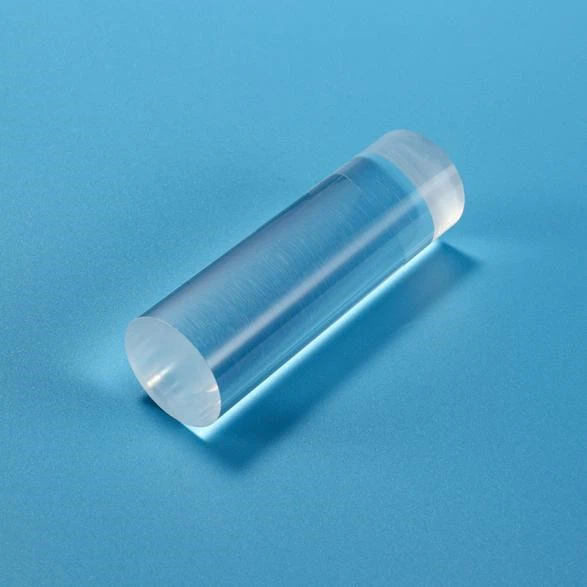
One of the common forms of quartz blank material is the Quartz Rod. Quartz rods are cylindrical in shape and are used in a variety of industries. In the semiconductor industry, they're used as support structures in the manufacturing process. The smooth surface of the quartz rod ensures that it doesn't contaminate the semiconductor materials during production. They're also used in optical applications. Since quartz has good optical transparency, these rods can be used to guide light in certain optical systems.

Another form is the Raw Material Of Quartz Plate. Quartz plates are flat and can be cut into different sizes. They're often used in the electronics industry. For example, they can be used as substrates for printed circuit boards (PCBs). The electrical insulating properties of quartz make it a good choice for this application. It helps prevent electrical interference between different components on the PCB. In the solar energy industry, quartz plates are also used in some solar panels. They can protect the sensitive solar cells from environmental factors while still allowing sunlight to pass through.
Then there's the Quartz Ingot. Quartz ingots are large, solid blocks of quartz. They're usually the starting point for making other quartz products. Manufacturers can cut and shape the ingot into rods, plates, or other custom - made parts. The purity of the quartz in an ingot is crucial. High - purity quartz ingots are used in applications where even the slightest impurity can cause problems, such as in the production of high - end optical lenses or precision scientific instruments.
Now, let's talk about glass as a blank material. Glass is also widely used, but it's different from quartz in several ways. One of the main differences is in their chemical composition. Quartz is mainly made of silicon dioxide (SiO₂) in a highly ordered crystalline structure, while glass is an amorphous solid with a more random arrangement of its molecules.
Glass is generally more brittle than quartz. If you drop a glass object, it's more likely to break compared to a quartz one. However, glass is also much cheaper to produce. This makes it a popular choice for everyday items like drinking glasses, windows, and some simple optical lenses.
In terms of optical properties, glass can have a wider range of refractive indices compared to quartz. This means that glass can be used to create lenses with different focusing abilities. But quartz has better optical clarity and less dispersion, which is important for high - precision optical applications.
Ceramics are another type of blank material. Ceramics are made from inorganic, non - metallic materials. They're known for their hardness and wear resistance. For example, ceramic bearings are used in some high - performance machinery. The hardness of ceramics allows them to withstand high pressures and friction without wearing out quickly.
Compared to quartz and glass, ceramics are more resistant to chemical corrosion. They can be used in harsh chemical environments where quartz and glass might be damaged. However, ceramics are also more difficult to shape. Manufacturing ceramic parts often requires special processes like sintering, which involves heating the ceramic material to a high temperature to make it dense and hard.
Metals are also commonly used as blank materials. Metals like aluminum, steel, and copper have their own unique properties. Aluminum is lightweight and has good corrosion resistance. It's used in the aerospace industry to make parts of airplanes because of its low weight, which helps reduce fuel consumption.
Steel is strong and durable. It's used in construction for building structures like bridges and skyscrapers. Copper is an excellent conductor of electricity. It's widely used in electrical wiring and electronic components.
When it comes to choosing the right blank material for a particular application, there are several factors to consider. Cost is always a big factor. If you're making a consumer product with a tight budget, glass or a common metal might be the way to go. But if you need high - performance and precision, quartz or a special ceramic might be necessary.
The required properties of the final product also play a crucial role. If you need something with high heat resistance, quartz or a ceramic might be a better choice. If electrical conductivity is important, copper or another conductive metal is the obvious option.
The manufacturing process is another consideration. Some materials are easier to machine and shape than others. For example, metals can be easily cut, drilled, and bent using common manufacturing tools. But quartz and ceramics might require more specialized equipment and techniques.
So, as you can see, there are significant differences between various blank materials. Each material has its own strengths and weaknesses, and choosing the right one depends on your specific needs.
If you're in the market for blank materials and need help deciding which one is right for your project, don't hesitate to reach out. We're here to assist you in finding the perfect material for your application. Whether it's quartz rods, quartz plates, or any other type of blank material, we've got you covered. Let's have a chat about your requirements and see how we can work together to get the best results.
References
- "Materials Science and Engineering: An Introduction" by William D. Callister Jr. and David G. Rethwisch
- "Handbook of Glass Properties" edited by David R. Uhlmann and Narottam P. Bansal
- "Ceramics: Processing and Applications" by John B. Wachtman Jr.


