

What are the static - resistance properties of blank material?
Leave a message

Hey there! As a supplier of blank materials, I often get asked about the static - resistance properties of these materials. In this blog, I'm gonna break down what static - resistance means for blank materials, why it's important, and how different types of blank materials stack up in terms of their static - resistance capabilities.
What is Static Resistance?
First off, let's talk about what static resistance actually is. Static electricity is the imbalance of electric charges on the surface of a material. When two materials come into contact and then separate, electrons can transfer from one material to the other, creating a static charge. Static resistance, on the other hand, is a material's ability to resist the build - up and discharge of static electricity.

Why does this matter? Well, in many industries, static electricity can cause a whole bunch of problems. In electronics manufacturing, for example, a static discharge can damage sensitive electronic components. In the food and pharmaceutical industries, static charges can attract dust and contaminants, which is a big no - no for maintaining a clean and hygienic production environment.
Static - Resistance Properties of Different Blank Materials
Quartz Sand
Quartz sand is a popular blank material, and it has some interesting static - resistance properties. Quartz Sand is made up of silicon dioxide, which is a relatively good insulator. This means that it doesn't conduct electricity very well, and it can resist the flow of electrons that cause static charges.
However, the static - resistance of quartz sand can be affected by a few factors. For one, the purity of the quartz sand matters. Higher - purity quartz sand generally has better static - resistance properties because there are fewer impurities that could act as conductive paths for electrons. Also, the moisture content in the quartz sand can play a role. If the sand is too dry, it's more likely to build up static charges. On the other hand, a little bit of moisture can help dissipate static electricity.
Quartz Rod
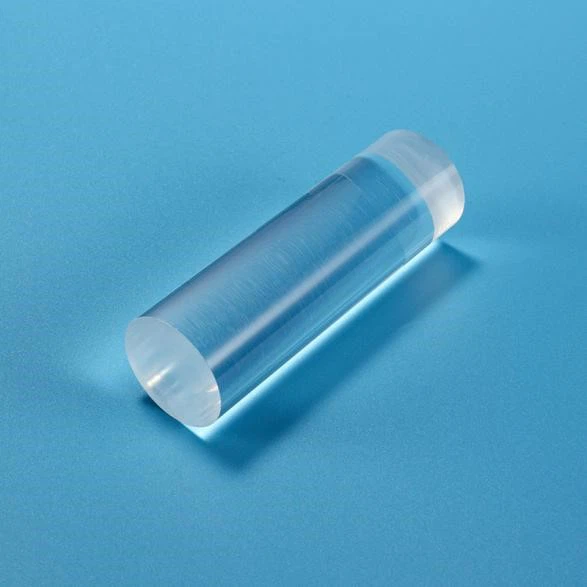
Quartz Rod is another form of quartz - based blank material. Similar to quartz sand, quartz rods are made of silicon dioxide and are good insulators. The smooth surface of a quartz rod can also help reduce the chances of static charge build - up.
One of the advantages of quartz rods in terms of static resistance is their uniformity. Since they are manufactured to have a consistent composition and structure, their static - resistance properties are more predictable compared to some other materials. This makes them a great choice for applications where consistent static - resistance is required, such as in precision electronics manufacturing.
Quartz Ingot
Quartz Ingot is a solid block of quartz material. It has excellent static - resistance properties due to its high purity and dense structure. The solid form of the ingot means that there are fewer surface irregularities where static charges could accumulate.
Quartz ingots are often used in high - end applications where strict static - control measures are necessary. For example, in the semiconductor industry, where even the slightest static discharge can ruin an entire production batch, quartz ingots are used to create components that need to be highly resistant to static electricity.
Measuring Static Resistance
So, how do we measure the static - resistance properties of these blank materials? There are a few different methods. One common way is to use a surface resistance meter. This device measures the resistance of the material's surface to the flow of electric current. A higher surface resistance generally indicates better static - resistance.
Another method is to measure the charge decay time. This involves charging the material and then measuring how long it takes for the charge to dissipate. A shorter charge decay time means that the material can get rid of static charges more quickly, which is a sign of good static - resistance.
Improving Static Resistance
If you find that the static - resistance of your blank material isn't up to par, there are a few things you can do to improve it. One option is to treat the material with an anti - static coating. These coatings contain conductive materials that help to dissipate static charges.
You can also control the environment where the material is stored and used. For example, maintaining a certain level of humidity can help reduce static build - up. In a dry environment, static charges are more likely to build up, so using a humidifier can be a simple and effective solution.
Why Choose Our Blank Materials?
As a supplier of blank materials, we take pride in offering high - quality products with excellent static - resistance properties. Our quartz sand, quartz rods, and quartz ingots are carefully manufactured to ensure consistent quality and performance. We have strict quality control measures in place to make sure that each batch of material meets the highest standards.
Whether you're in the electronics, food, pharmaceutical, or any other industry that requires static - resistant materials, our products are a great choice. We understand the importance of static control in your operations, and we're committed to providing you with the best solutions.
Conclusion
In conclusion, the static - resistance properties of blank materials are crucial in many industries. Quartz - based materials like quartz sand, quartz rods, and quartz ingots have unique static - resistance characteristics that make them suitable for a wide range of applications. By understanding these properties and taking steps to improve them if necessary, you can ensure that your operations run smoothly and your products are of the highest quality.
If you're interested in learning more about our blank materials or have any questions about their static - resistance properties, don't hesitate to reach out. We're here to help you find the perfect solution for your needs. Let's start a conversation and see how we can work together to meet your requirements.
References
- "Handbook of Static Electricity"
- "Materials Science and Engineering: An Introduction" by William D. Callister Jr. and David G. Rethwisch


