

What factors can cause the color change of Quartz Ingot?
Leave a message

As a supplier of Quartz Ingot, I've witnessed firsthand the intrigue and importance of its color variations. Quartz Ingot, a key material in various industries, undergoes color changes due to several factors. Understanding these factors can significantly impact the selection and application of Quartz Ingot in different fields.
1. Impurities
One of the most common causes of color change in Quartz Ingot is the presence of impurities. Quartz, in its pure form, is colorless. However, trace amounts of foreign elements can introduce vivid colors. For instance, iron impurities can lead to a yellow or brown tint. Iron exists in different oxidation states, and each state can contribute to a distinct color. Ferrous iron (Fe²⁺) may cause a pale yellow color, while ferric iron (Fe³⁺) can result in a deeper brown or red - orange hue.
Manganese is another impurity that can affect the color of Quartz Ingot. When present, it can impart a pink or purple color. The intensity of the color depends on the concentration of manganese. A small amount might create a delicate pink shade, while a higher concentration can lead to a more pronounced purple. Titanium impurities can also play a role, often causing a blue or gray color in the Quartz Ingot.
These impurities can enter the quartz during its formation. In nature, quartz forms in various geological environments where it comes into contact with different minerals and elements. During the manufacturing process of Quartz Ingot, if the raw materials are not of high purity, these impurities can be carried over, leading to color variations.
2. Radiation Exposure
Natural radiation can also cause color changes in Quartz Ingot. Radioactive elements in the surrounding environment, such as uranium, thorium, and potassium - 40, emit alpha, beta, and gamma rays. When Quartz Ingot is exposed to these radiations over a long period, it can cause structural changes in the quartz lattice.
These structural changes can trap electrons in the lattice, creating color centers. For example, exposure to gamma rays can create defects in the quartz structure where electrons are trapped. These trapped electrons absorb certain wavelengths of light, resulting in a change in the observed color. Smoky quartz, which has a brownish - gray to black color, is often the result of natural radiation exposure.
In a manufacturing setting, artificial radiation can be used intentionally to change the color of Quartz Ingot. This process is carefully controlled to achieve the desired color and quality. However, it requires strict safety measures to ensure that the radiation levels are within acceptable limits.
3. Heat Treatment
Heat treatment is a widely used method to alter the color of Quartz Ingot. By subjecting the Quartz Ingot to specific temperatures and heating rates, the internal structure of the quartz can be modified, leading to color changes.

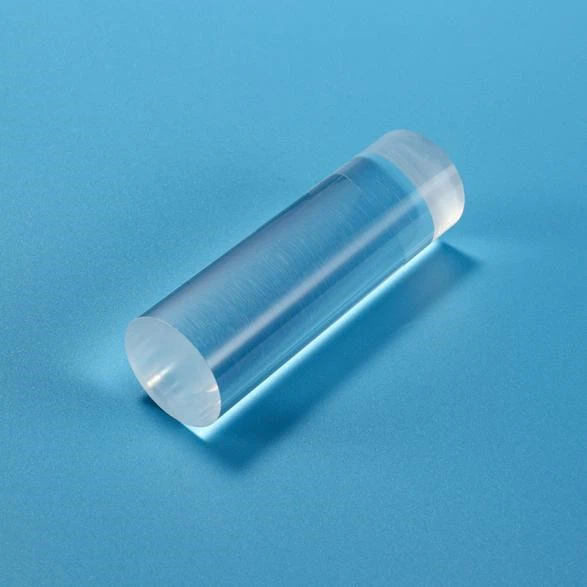
For example, heating amethyst (a purple variety of quartz) at a certain temperature can transform it into citrine, which has a yellow to orange color. This is because the heat causes a change in the oxidation state of iron impurities within the quartz. The heat breaks the chemical bonds associated with the iron, allowing it to change its oxidation state and thus altering the color absorption properties of the quartz.
The duration of the heat treatment also matters. A short - term high - temperature treatment may have a different effect compared to a long - term low - temperature treatment. Manufacturers need to carefully control these parameters to achieve consistent and desired color results.
4. Pressure
Pressure can also influence the color of Quartz Ingot. In nature, quartz is often formed under high - pressure conditions deep within the Earth's crust. Changes in pressure can cause the quartz lattice to deform, which in turn affects the way it interacts with light.
High - pressure environments can squeeze the atoms in the quartz lattice closer together, altering the energy levels of the electrons. This can change the wavelengths of light that the quartz absorbs, resulting in a color change. For example, some types of blue quartz may be formed under high - pressure conditions.
In industrial applications, pressure can be applied during the manufacturing process to modify the color of Quartz Ingot. However, this requires specialized equipment and precise control to ensure that the pressure is evenly distributed and does not cause damage to the ingot.
5. Crystal Structure and Defects
The crystal structure of Quartz Ingot can have a significant impact on its color. Imperfections in the crystal lattice, such as dislocations, vacancies, and interstitial atoms, can create additional energy levels within the quartz. These energy levels can absorb specific wavelengths of light, leading to color variations.
For example, a high concentration of dislocations in the crystal lattice can scatter light in a way that changes the overall appearance of the Quartz Ingot. The presence of vacancies (missing atoms in the lattice) can also create color centers, similar to those formed by radiation exposure.
The growth conditions of the quartz crystal can influence the formation of these defects. Rapid crystal growth may lead to a higher density of defects compared to slow, controlled growth. Manufacturers need to optimize the growth conditions to minimize unwanted defects and achieve the desired color and quality of the Quartz Ingot.
Applications Affected by Color
The color of Quartz Ingot can have a significant impact on its applications. In the optical industry, colorless or specific - color Quartz Ingot is highly sought after. For example, colorless Quartz Ingot is used in the production of high - quality lenses and prisms because it allows for minimal light absorption and distortion.
In the jewelry industry, the color of Quartz Ingot is a major factor in its value. Amethyst, with its beautiful purple color, is a popular gemstone. The color variations can add uniqueness and aesthetic appeal to the jewelry pieces.
In the semiconductor industry, the purity and color of Quartz Ingot are crucial. A consistent color and high purity are required to ensure the performance and reliability of semiconductor devices. Any color changes due to impurities or other factors can affect the electrical properties of the quartz, which in turn can impact the functionality of the semiconductor chips.
Conclusion
As a supplier of Quartz Ingot, I understand the importance of these color - changing factors. Whether it's the natural beauty of color variations in jewelry - grade quartz or the strict requirements for color consistency in high - tech applications, these factors need to be carefully considered.
At our company, we strive to provide high - quality Quartz Ingot with consistent color and purity. We use advanced purification techniques to minimize impurities, precise heat treatment and radiation processes to achieve desired colors, and strict quality control measures to ensure that our products meet the highest standards.
If you are in the market for Quartz Ingot, Quartz Rod, or Raw Material Of Quartz Plate, we invite you to contact us for a detailed discussion. Our team of experts is ready to assist you in selecting the right product for your specific needs. We look forward to the opportunity to work with you and contribute to the success of your projects.
References
- Deer, W. A., Howie, R. A., & Zussman, J. (1992). Rock - forming Minerals: Single - Chain Silicates. Longman Scientific & Technical.
- Nassau, K. (1983). Gems Made by Man. Van Nostrand Reinhold Company.
- Skinner, B. J., & Porter, S. C. (2000). The Dynamic Earth: An Introduction to Physical Geology. John Wiley & Sons.


