

What is the density of a quartz rod?
Leave a message

What is the density of a quartz rod?
As a supplier of high - quality Quartz Rods, I often encounter various inquiries from customers, and one question that comes up quite frequently is about the density of a quartz rod. In this blog, I'll delve into the details of quartz rod density, its influencing factors, and why it matters in different applications.
Understanding the Basics: What is Quartz?
Quartz is a mineral composed of silicon and oxygen atoms, with the chemical formula SiO₂. It is one of the most abundant minerals on Earth and has a wide range of applications due to its unique physical and chemical properties. Quartz exists in different forms, such as crystalline quartz and fused quartz. Crystalline quartz has a well - ordered atomic structure, while fused quartz is made by melting high - purity quartz sand and then cooling it rapidly to form an amorphous structure.
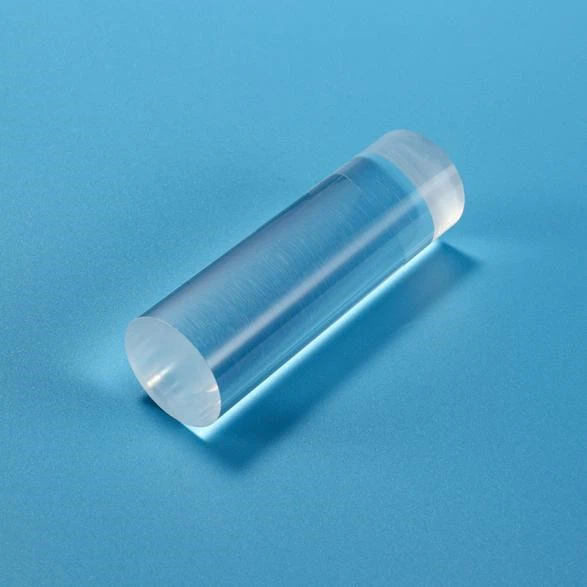
Quartz rods can be made from both crystalline and fused quartz, and the density can vary depending on the type of quartz used. Fused quartz rods are more commonly used in many industrial applications because of their excellent thermal stability, low thermal expansion, and high chemical resistance.
The Density of Quartz Rods
The density of a quartz rod typically ranges from about 2.2 g/cm³ for fused quartz to around 2.65 g/cm³ for crystalline quartz. The reason for this difference lies in their atomic structures. In crystalline quartz, the silicon and oxygen atoms are arranged in a regular, repeating pattern, which allows for a more compact packing of atoms. This results in a higher density compared to fused quartz, where the rapid cooling process during manufacturing creates a more random atomic arrangement, leading to a less dense material.
Let's take a closer look at the two types:
Fused Quartz Rods:
Fused quartz rods have a density of approximately 2.2 g/cm³. This relatively low density makes them ideal for applications where weight is a concern. For example, in aerospace and aviation industries, fused quartz rods can be used in optical systems and instrument components. Their low density helps to reduce the overall weight of the equipment, which is crucial for fuel efficiency and performance. Additionally, the thermal properties of fused quartz, combined with its low density, make it suitable for use in high - temperature environments. You can find more information about the raw materials and production of fused quartz rods on our Raw Material Of Quartz Plate page.
Crystalline Quartz Rods:
Crystalline quartz rods have a density of around 2.65 g/cm³. They are often used in applications where high mechanical strength and excellent optical properties are required. For instance, in the semiconductor industry, crystalline quartz rods are used as crucibles for growing single - crystal silicon wafers. The high density and stability of crystalline quartz ensure that the crucible can withstand the high - temperature and high - pressure conditions during the crystal - growth process. If you are interested in our crystalline quartz rods, you can visit our Quartz Rod page.
Factors Affecting the Density of Quartz Rods
Several factors can influence the density of quartz rods:
Impurities:
The presence of impurities in the quartz can affect its density. Even small amounts of foreign substances can disrupt the atomic structure of quartz, leading to changes in density. For example, if the quartz contains traces of metals or other minerals, the density may deviate from the standard values. High - purity quartz is often used in applications where precise density is required, such as in scientific research and high - end industrial applications.
Manufacturing Process:
The manufacturing process can also have a significant impact on the density of quartz rods. For fused quartz, the melting temperature, cooling rate, and the purity of the starting materials all play a role. A slower cooling rate may allow for more atomic rearrangement, potentially increasing the density slightly. In the case of crystalline quartz, the growth conditions, such as temperature, pressure, and the presence of growth - promoting agents, can affect the quality and density of the crystal.
Porosity:
Porosity refers to the presence of small pores or voids within the quartz rod. Higher porosity leads to a lower density because the voids take up space without adding mass. The manufacturing process can introduce porosity, especially if there are gas bubbles trapped during melting or if the material is not properly compacted. Porosity can also affect other properties of the quartz rod, such as its mechanical strength and optical clarity.
Why Does the Density of Quartz Rods Matter?
In Engineering and Design:
In engineering and design, the density of a material is a critical parameter. When designing a structure or a component using quartz rods, engineers need to know the density to calculate the weight, balance, and stability of the overall system. For example, in the design of a precision optical instrument, the weight distribution of the components can affect the accuracy of the measurements. By knowing the density of the quartz rod, engineers can make more informed decisions about the placement and sizing of the components.
In Material Selection:
The density of quartz rods can also influence material selection. Depending on the specific requirements of an application, a lower - density or higher - density quartz rod may be preferred. For applications where weight is a major concern, fused quartz rods with their lower density are a better choice. On the other hand, if high mechanical strength and stability are required, crystalline quartz rods with their higher density may be more suitable.
In Quality Control:
Density is an important quality control parameter in the production of quartz rods. By measuring the density of the rods, manufacturers can ensure that the products meet the specified standards. Any significant deviation from the expected density may indicate a problem in the manufacturing process, such as the presence of impurities or incorrect processing conditions. Regular density testing can help to identify and correct these issues, ensuring the consistent quality of the quartz rods.

Applications of Quartz Rods Based on Density
Optical Applications:
In optical applications, such as lenses, prisms, and optical fibers, the density of the quartz rod can affect the optical properties. A more uniform density ensures better optical clarity and less scattering of light. Fused quartz rods, with their relatively low density and high optical transparency, are commonly used in these applications. They can be used in ultraviolet (UV), visible, and infrared (IR) regions, making them suitable for a wide range of optical instruments, including spectrometers and laser systems.
Semiconductor Industry:
In the semiconductor industry, quartz rods are used in various processes, such as wafer handling and furnace components. Crystalline quartz rods, with their high density and excellent thermal stability, are often used as crucibles for growing single - crystal silicon wafers. The high density helps to maintain the shape and integrity of the crucible under high - temperature conditions, ensuring the quality of the silicon wafers. You can learn more about the different types of quartz products used in the semiconductor industry on our Quartz Ingot page.
Chemical and Laboratory Applications:
Quartz rods are also used in chemical and laboratory applications due to their chemical resistance. Their density can affect their handling and placement in laboratory equipment. For example, in a chemical reactor, the density of the quartz rod can determine whether it floats or sinks in the reaction mixture, which can be important for the efficiency of the reaction.
Conclusion
In conclusion, the density of a quartz rod is an important property that can vary depending on the type of quartz (fused or crystalline), impurities, manufacturing process, and porosity. Understanding the density of quartz rods is crucial for engineering, design, material selection, and quality control. Whether you are in the aerospace, semiconductor, optical, or chemical industry, the right choice of quartz rod density can make a significant difference in the performance and efficiency of your applications.
If you are interested in purchasing high - quality quartz rods or have any questions about their density and applications, please feel free to contact us for a detailed discussion. We are committed to providing the best products and services to meet your specific needs.
References
- Deer, W. A., Howie, R. A., & Zussman, J. (1992). An Introduction to the Rock - Forming Minerals. Longman Scientific & Technical.
- Kingery, W. D., Bowen, H. K., & Uhlmann, D. R. (1976). Introduction to Ceramics. John Wiley & Sons.
- Schubert, W. (2001). Handbook of Glass Manufacture. Chapman & Hall.


