

What is the difference between a quartz beaker and a glass beaker?
Leave a message

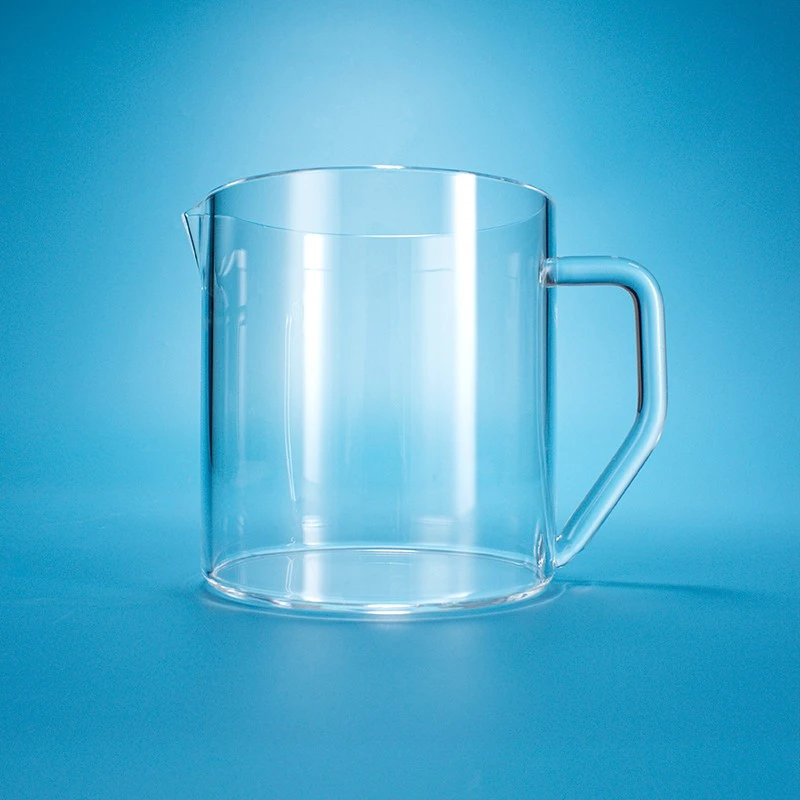
Hey there! As a supplier of Quartz Beakers, I often get asked about the difference between quartz beakers and glass beakers. It's a great question, especially for those who work in labs or are just curious about these essential pieces of equipment. So, let's dive right in and explore the distinctions between these two types of beakers.
Material Composition
First off, let's talk about what they're made of. Glass beakers are typically made from soda - lime glass or borosilicate glass. Soda - lime glass is the most common type, used in everyday glassware like windows and bottles. It's relatively inexpensive to produce, but it's not very resistant to thermal shock. Borosilicate glass, on the other hand, is a bit more high - tech. It contains boron trioxide, which gives it better thermal resistance. That means it can handle sudden temperature changes without cracking as easily as soda - lime glass.
Quartz beakers, however, are made from pure silica (SiO₂). Quartz is a naturally occurring mineral, and when it's used to make beakers, it goes through a special manufacturing process to ensure high purity. This pure silica composition gives quartz beakers some unique properties that set them apart from glass beakers.
Thermal Resistance
One of the most significant differences between quartz and glass beakers is their thermal resistance. Glass beakers, even the borosilicate ones, have their limits when it comes to heat. They can usually withstand temperatures up to around 400 - 500 degrees Celsius. If you try to heat them beyond that, there's a high risk of them cracking or shattering.
Quartz beakers, on the other hand, can handle much higher temperatures. They can withstand temperatures up to 1000 degrees Celsius or even more in some cases. This makes them ideal for experiments that involve extreme heat, like high - temperature chemical reactions or melting certain substances. For example, if you're working with metals that have high melting points, a quartz beaker is the way to go.
Chemical Resistance
Chemical resistance is another area where quartz and glass beakers differ. Glass beakers are generally resistant to many common chemicals, but they can react with certain substances. For instance, hydrofluoric acid can etch or dissolve glass over time. And some strong alkalis can also cause damage to glass beakers.
Quartz beakers have excellent chemical resistance. They are highly resistant to most acids, alkalis, and other corrosive chemicals. This makes them suitable for a wide range of chemical experiments, especially those involving harsh chemicals. Whether you're working with concentrated sulfuric acid or strong bases, a quartz beaker can hold up well.
Optical Properties
When it comes to optical properties, quartz beakers have an edge over glass beakers. Quartz has a very high transparency in the ultraviolet (UV), visible, and infrared (IR) regions of the electromagnetic spectrum. This means that light can pass through quartz beakers with very little absorption or distortion.
Glass beakers, on the other hand, have some limitations in terms of their optical properties. Soda - lime glass absorbs UV light to a significant extent, and borosilicate glass also has some absorption in the UV region. This can be a problem if you're conducting experiments that involve UV light, such as UV spectroscopy. In such cases, a quartz beaker is the better choice because it allows for accurate measurements without interference from light absorption.

Cost
Cost is always a factor to consider when choosing between quartz and glass beakers. Glass beakers are generally much more affordable than quartz beakers. The manufacturing process for glass is less complex and the raw materials are more readily available, which keeps the cost down. This makes glass beakers a popular choice for routine lab work where the extreme properties of quartz are not required.
Quartz beakers, on the other hand, are more expensive. The high - purity silica used in their production is costly, and the manufacturing process is more involved. However, if you need the superior thermal, chemical, and optical properties that quartz offers, the investment may be worth it.
Applications
The differences in properties between quartz and glass beakers also lead to different applications. Glass beakers are commonly used in general lab work, such as mixing solutions, heating small amounts of liquids, and performing basic chemical reactions. They are also widely used in educational settings because of their affordability.
Quartz beakers, with their superior properties, are used in more specialized applications. They are often used in high - end research laboratories, where precise measurements and extreme conditions are required. For example, in semiconductor manufacturing, quartz beakers are used to handle high - purity chemicals and to withstand the high temperatures involved in the process. They are also used in spectroscopy experiments, where their excellent optical properties are crucial for accurate results.
Other Quartz Labware
If you're interested in quartz labware, besides quartz beakers, there are other useful items available. For example, the Quartz Separating Funnel is great for separating immiscible liquids. Its high chemical resistance ensures that it can handle a variety of solvents without getting damaged. And the Quartz Reagent Bottle is perfect for storing high - purity chemicals. It provides a stable and inert environment to keep the chemicals safe.
If you're in the market for Quartz Beakers, or any other quartz labware, I'd love to help you out. Whether you're a researcher, a lab technician, or someone involved in a scientific project, having the right equipment is crucial for success. I can provide you with high - quality quartz beakers that meet your specific needs.
If you have any questions or want to discuss your requirements further, don't hesitate to reach out. We can talk about the different sizes, specifications, and prices available. Let's work together to find the best quartz beakers for your lab.
References
- Atkins, P., & de Paula, J. (2006). Physical Chemistry. Oxford University Press.
- Skoog, D. A., West, D. M., & Holler, F. J. (1996). Fundamentals of Analytical Chemistry. Saunders College Publishing.


