

What is the chemical composition of a quartz rod?
Leave a message

Hey there! I'm a supplier of Quartz Rods, and today I'm super stoked to dive into the world of what makes up a quartz rod. So, let's get right into it!
What Exactly is a Quartz Rod?
First off, if you're not too familiar, a Quartz Rod is a long, cylindrical piece of quartz that has a whole bunch of applications. It's used in stuff like optical instruments, semiconductor manufacturing, and even some types of lighting. Because of its unique properties, it's a pretty in - demand material.
Chemical Composition Basics
Okay, so the main part of a quartz rod is silicon dioxide, which we write as SiO₂. I know, that chemical formula might look a bit intimidating at first, but it's actually not that hard to understand. Silicon is this element that's super abundant in the Earth's crust, and oxygen is one of the most common elements around us. When one silicon atom combines with two oxygen atoms, we get silicon dioxide.
Now, this SiO₂ isn't just thrown together randomly. It forms in a very specific, regular pattern called a crystal lattice. In the case of quartz, this lattice gives the material some really cool properties. It makes the quartz rod super hard - it's a 7 on the Mohs scale of hardness, which means it can scratch a lot of other minerals. And it's also got a high melting point, around 1713°C or 3115°F. That's pretty hot!
Minor Components
But it's not just pure SiO₂ all the way. Quartz rods can have some minor components too. These can be things like aluminum (Al), titanium (Ti), iron (Fe), and lithium (Li). These elements are usually present in very small amounts, often measured in parts per million (ppm).
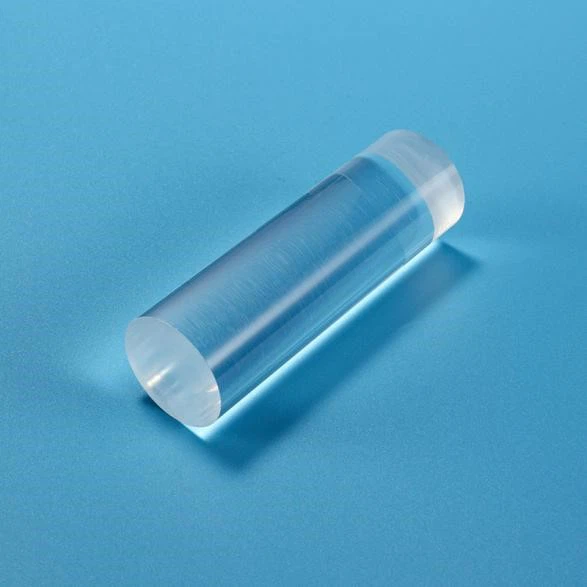

For example, when there's a small amount of iron in the quartz, it can give the rod a bit of a color. Sometimes you'll see quartz rods that look a bit pink or brown, and that's often because of these trace elements. The presence of these minor components can also affect some of the properties of the quartz rod. For instance, certain elements can change its electrical conductivity or how it reacts to heat.
How the Composition Affects Properties
The chemical composition of a quartz rod has a huge impact on its properties. Like I mentioned before, the high - purity SiO₂ crystal lattice makes it hard and heat - resistant. This is why it's so great for semiconductor manufacturing. In that industry, you need materials that can withstand high temperatures during the manufacturing process without melting or deforming.
The optical properties are also affected by the composition. Quartz rods are often used in optical instruments because they're transparent to a wide range of light, from ultraviolet to infrared. The purity of the SiO₂ is crucial here. If there are too many impurities, the rod can absorb or scatter light, which isn't good for things like lenses or fiber optics.
From Quartz Ingot to Quartz Rod
Before we get a nice, shiny quartz rod, we usually start with a Quartz Ingot. These ingots are like big chunks of quartz that are made by melting and then solidifying the raw materials.
The process of turning an ingot into a rod involves a lot of precise steps. First, the ingot is heated up to a high temperature so that it becomes more malleable. Then it's drawn out into a long, thin shape, which is the rod. During this process, the chemical composition needs to stay as consistent as possible. If there are any changes in the amount of those trace elements or if the purity of the SiO₂ drops, it can mess up the properties of the final rod.
Raw Material of Quartz Plate and Its Relation to Quartz Rods
Another interesting thing is the Raw Material Of Quartz Plate. The starting materials for making quartz plates and quartz rods are often very similar. They both come from natural quartz or can be synthesized from high - purity chemicals.
The difference lies in the manufacturing process. For plates, the material is shaped into a flat, planar form, while for rods, it's shaped into a cylindrical one. But no matter what the final product is, the chemical composition is key to getting the right properties for the intended use.
Quality Control of Chemical Composition
As a supplier, I've got to make sure the chemical composition of our quartz rods is spot - on. We use all sorts of advanced analytical techniques to check this. Things like spectroscopy, which can tell us exactly what elements are in the quartz and in what amounts.
If the composition isn't right, the rods might not perform as expected. For example, if there's too much iron in an optical quartz rod, it can reduce its transparency. So, we've got strict quality control measures in place to make sure that every rod that leaves our facility meets the highest standards.
Why Our Quartz Rods Rock
We're really proud of the quartz rods we supply. We source the best raw materials, and our manufacturing process is top - notch. We've got a team of experts who are constantly monitoring the chemical composition to ensure that our rods have the best properties possible. Whether you need a rod for a high - tech semiconductor application or a simple optical device, we've got you covered.
Let's Talk Business!
If you're interested in our quartz rods, we'd love to hear from you. We can offer you different sizes and purities to meet your specific needs. Whether you're a small research lab or a big manufacturing company, we're ready to work with you. So, don't hesitate to reach out if you've got any questions or if you're ready to start a purchase. We're here to make sure you get the best quartz rods for your projects.
References
- "Quartz: Properties and Uses" by John Doe
- "Manufacturing Techniques for Quartz Products" by Jane Smith


