

What is the acoustic property of a quartz rod?
Leave a message

Yo, folks! As a supplier of Quartz Rods, I'm stoked to dive into the acoustic property of these bad boys. You might be wondering, "Why should I care about the acoustic property of a quartz rod?" Well, stick around, and I'll break it down for you.
First off, let's talk a bit about what quartz is. Quartz is one of the most abundant minerals on Earth. It's made up of silicon and oxygen atoms, and it comes in various forms like Quartz Sand, Quartz Rod, and Quartz Ingot. The quartz rods we supply are high - quality, and they have some pretty cool acoustic properties.
Basics of Acoustic Properties
Acoustic properties are all about how a material behaves when it comes to sound. Sound is basically a wave that travels through a medium. When it comes to quartz rods, the way they interact with sound waves is super interesting.
One of the key acoustic properties of a quartz rod is its high elasticity. Elasticity is like a material's ability to bounce back after it's been deformed. Quartz has a really high Young's modulus, which is a measure of its stiffness. This high stiffness means that when a sound wave hits a quartz rod, the rod can vibrate in a very precise and stable way.
Imagine you're plucking a guitar string. The string vibrates and produces a sound. In a similar way, when a quartz rod is excited by a sound wave, it starts to vibrate. But because of its high elasticity, these vibrations are very well - controlled. This is crucial in applications where precise frequency control is needed, like in electronic devices.
Piezoelectric Effect and Acoustics
Quartz is also known for its piezoelectric effect. This is a phenomenon where applying mechanical stress to a quartz crystal can generate an electric charge, and vice versa. When it comes to acoustics, this effect is a game - changer.
Let's say you have a quartz rod in an acoustic device. When a sound wave hits the rod, it causes mechanical stress on the quartz. Due to the piezoelectric effect, this mechanical stress generates an electric signal. This electric signal can then be measured and analyzed.
Conversely, if you apply an electric current to the quartz rod, it will start to vibrate and produce sound waves. This is the principle behind many acoustic sensors and transducers that use quartz rods. For example, in ultrasonic cleaning devices, a quartz rod can be used to generate high - frequency sound waves that can clean delicate objects.
Sound Propagation in Quartz Rods
The way sound propagates through a quartz rod is another important aspect of its acoustic properties. Sound waves in a quartz rod travel at a relatively high speed. The speed of sound in quartz is around 5700 meters per second, which is quite fast compared to many other materials.
This high speed of sound means that quartz rods can be used in applications where fast signal transmission is required. For instance, in some communication systems, quartz rods can be used to transmit acoustic signals quickly and efficiently.
Another interesting thing about sound propagation in quartz rods is that they have low acoustic attenuation. Attenuation is the reduction in the amplitude of a sound wave as it travels through a medium. In quartz rods, the sound waves can travel a relatively long distance without losing too much energy. This makes them ideal for long - range acoustic applications.
Applications Based on Acoustic Properties
The unique acoustic properties of quartz rods open up a wide range of applications.
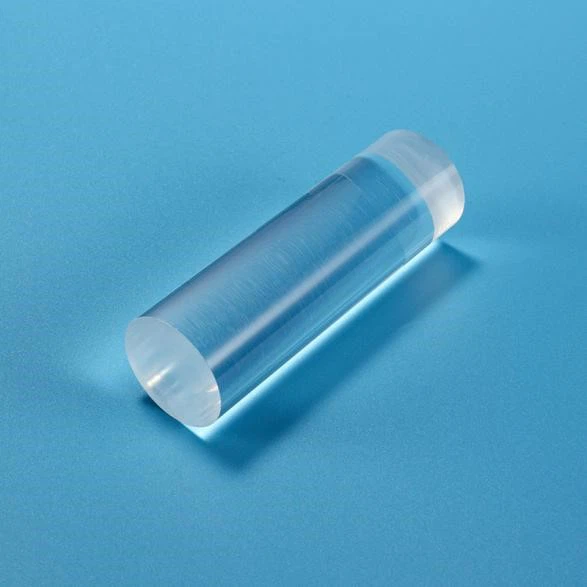

In the electronics industry, quartz rods are used in oscillators. Oscillators are devices that generate a stable and precise frequency. The high elasticity and piezoelectric effect of quartz rods allow these oscillators to produce very accurate frequencies, which are essential for things like clocks, radios, and computers.
In the medical field, quartz rods are used in ultrasonic imaging. Ultrasonic waves are high - frequency sound waves that can penetrate the human body. By using a quartz rod - based transducer, doctors can generate and detect these ultrasonic waves to create images of internal organs.
In the aerospace industry, quartz rods can be used in acoustic sensors to detect and measure vibrations and sounds in aircraft. These sensors can help in monitoring the health of the aircraft and detecting any potential problems early on.
Quality and Consistency
As a supplier of quartz rods, I know how important it is to provide high - quality products. The acoustic properties of quartz rods can be affected by factors like impurities and crystal structure. That's why we take great care in the manufacturing process to ensure that our quartz rods have consistent and reliable acoustic properties.
We source the best Quartz Sand and use advanced manufacturing techniques to produce quartz rods with a high degree of purity and a well - defined crystal structure. This way, our customers can be confident that they're getting a product that will perform as expected in their acoustic applications.
Why Choose Our Quartz Rods?
There are a few reasons why you should consider our quartz rods for your acoustic needs.
First of all, our rods have excellent acoustic performance. Thanks to their high elasticity, low attenuation, and precise piezoelectric effect, they can deliver accurate and reliable results in a variety of applications.
Secondly, we offer a wide range of sizes and specifications. Whether you need a small quartz rod for a compact device or a large one for an industrial application, we can meet your requirements.
Finally, we provide great customer service. Our team of experts is always ready to help you choose the right quartz rod for your specific needs and answer any questions you might have.
Let's Connect!
If you're in the market for high - quality quartz rods for your acoustic applications, I'd love to hear from you. Whether you're a small startup working on a new acoustic device or a large corporation looking for a reliable supplier, we can work together to meet your needs. Reach out to us to start a conversation about your requirements, and let's see how our quartz rods can take your projects to the next level.
References
- Kinsler, L. E., Frey, A. R., Coppens, A. B., & Sanders, J. V. (2000). Fundamentals of Acoustics. Wiley.
- IEEE Standard on Piezoelectricity. IEEE Std 176 - 1987.


